

Written by: Anish Rao, Head of Growth, Listen Labs | Last updated: April 15, 2026
Key Takeaways for Feature A/B Testing
- Integrating qualitative research with A/B testing creates stronger hypotheses and leads to 2x better feature adoption by revealing user motivations.
- Follow 8 steps: form qual-informed hypotheses, define metrics, design single-variable variants, calculate sample sizes, QA with feature flags, monitor in real time, analyze quant plus qual, and iterate continuously.
- Avoid common pitfalls like early peeking, sample ratio mismatches, multiple testing without correction, ignoring external factors, and insufficient statistical power.
- Use Listen Labs for AI-powered qualitative insights alongside quant platforms like Optimizely to run end-to-end tests that include emotional analysis.
- Book a demo to add qual insights in under 24 hours and reduce risk on new feature launches.
A/B Testing Foundations for PMs and UX Researchers
A/B testing compares two versions of a product feature by randomly splitting users between a control and a variant. Effective tests rely on clear hypotheses, single-variable changes, correct sample sizes, and predefined significance thresholds. Feature flags support safe rollouts by controlling which users see new functionality and when.
AI-powered qualitative research now strengthens every stage of this process. Traditional surveys may show what people do, but conversations reveal why. Listen Labs’ qual-at-scale platform runs many AI-moderated interviews in hours, closing the long-standing gap between depth and scale for product teams.
See how Listen Labs delivers rapid qual insights that feed directly into your A/B testing roadmap.
8 Steps to Run Effective A/B Tests on New Product Features
1. Form a Hypothesis Using Qual Interviews
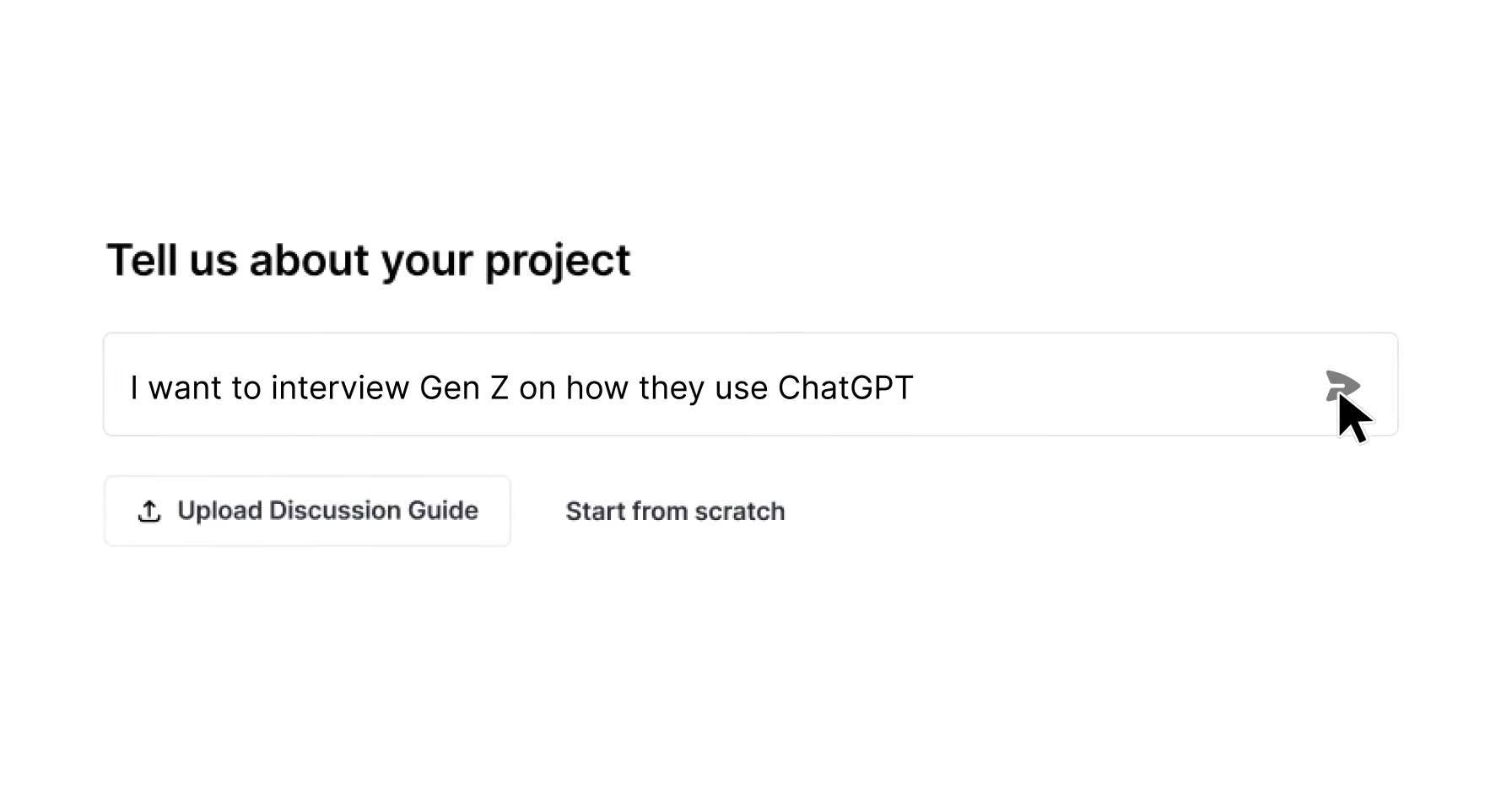
Strong A/B test hypotheses follow this structure: “[Specific change] will cause [measurable effect] because [reasoning based on research]”. The “because” clause should rest on real customer insights, not internal guesses.
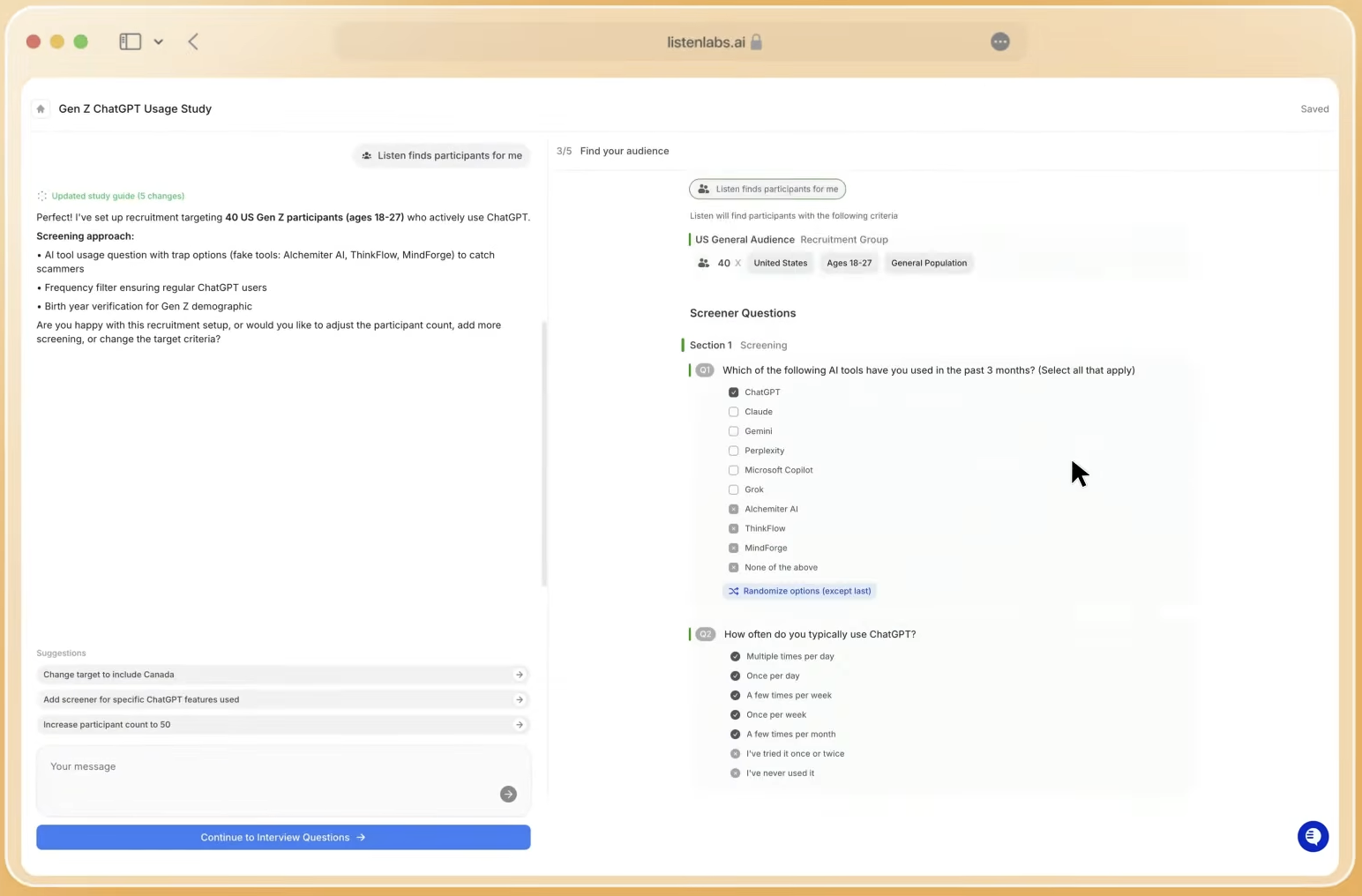
Listen Labs lets product teams run scalable AI-powered customer interviews before testing. Microsoft uses Listen Labs for customer research and interviews, collecting insights that would have taken weeks with traditional methods.
2. Define Metrics and Target Segments
Choose primary metrics that match business goals and can be measured consistently. Use qualitative data from behavior tools such as heatmaps and website surveys to uncover visitor pain points that guide metric selection.
Listen Labs’ Emotional Intelligence feature quantifies user emotions for each question and concept. Teams can track signals like joy, confusion, or frustration alongside conversion metrics. This emotional data supports smarter segmentation by engagement level and helps forecast long-term feature adoption.
3. Design Focused Variants
Test a single variable at a time so you can attribute changes in performance to a specific element. Testing multiple variables at once makes it impossible to know which element caused the difference. Use feature flags to manage rollout and enable fast rollbacks if results or stability look risky.
4. Calculate Required Sample Size
Accurate sample size calculations protect you from underpowered tests that miss real effects. Sample size formulas account for standard deviation (σ) and minimum detectable effect (Δ), where σ represents variation in outcomes and Δ represents the smallest effect you care to detect.
5. QA and Launch with Feature Flags
Run thorough quality assurance before launch to catch issues that could compromise test validity. Use feature flags for gradual rollouts that start with small user segments, then expand to full traffic after stability checks. This staged approach makes it easier to spot technical issues and sample ratio mismatches early, before they distort results at scale.
Validate your hypothesis with Listen Labs’ 30M-person panel before you commit engineering time to a full A/B test.
6. Monitor Results in Real Time
Track key metrics daily while resisting the urge to declare winners early. Stopping A/B tests before reaching statistical significance creates unreliable results. Configure automated alerts for technical issues or unexpected metric swings so you can respond quickly without constant manual checks.
7. Analyze Quantitative and Qualitative Signals Together
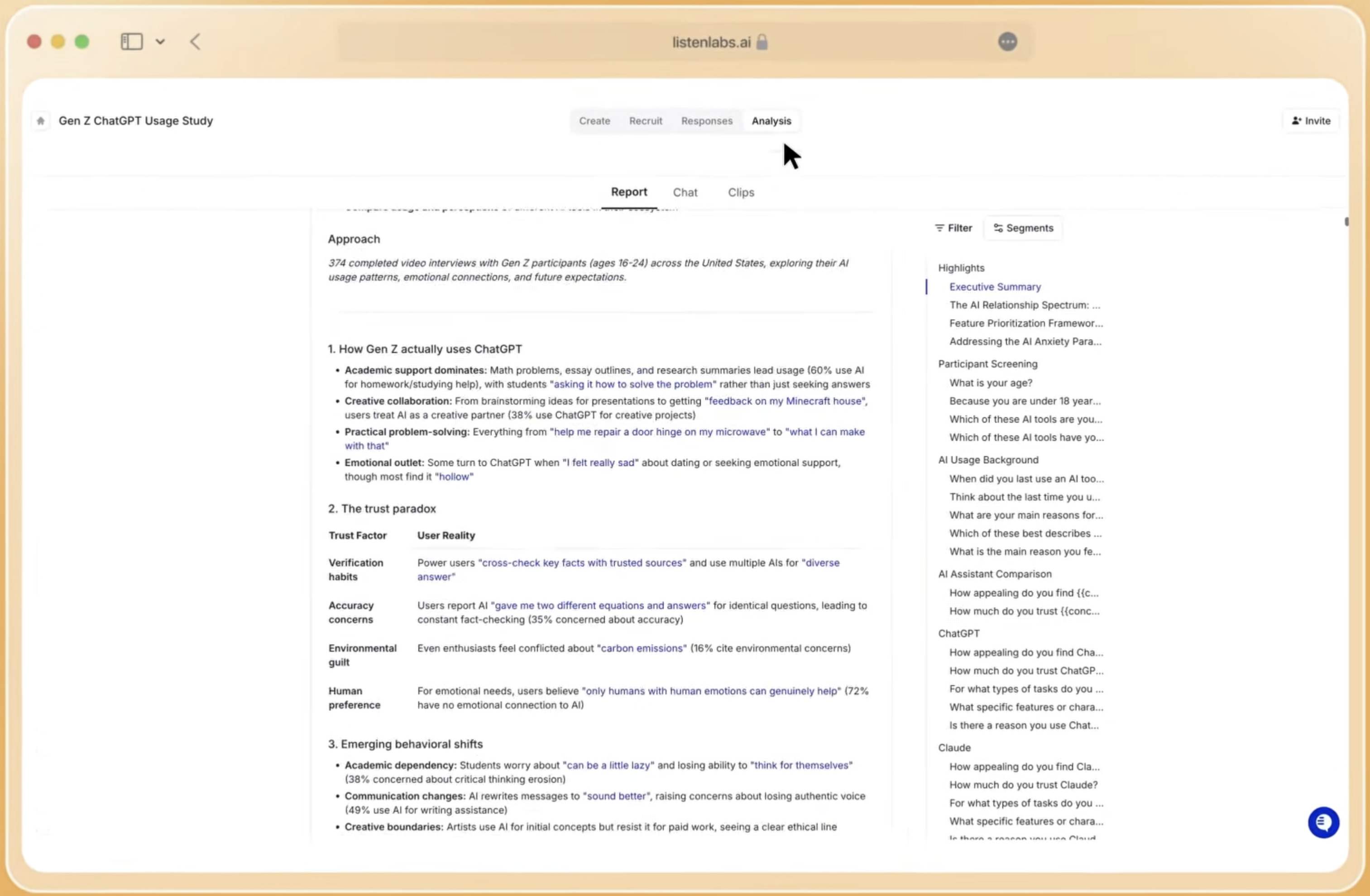
Combine quantitative outcomes with qualitative insights to understand what happened and why. Listen Labs’ Emotional Intelligence analyzes tone of voice, word choice, and micro-expressions to reveal emotions that transcripts alone miss. These emotional patterns explain the context behind metric lift or decline.
8. Iterate Based on What You Learn
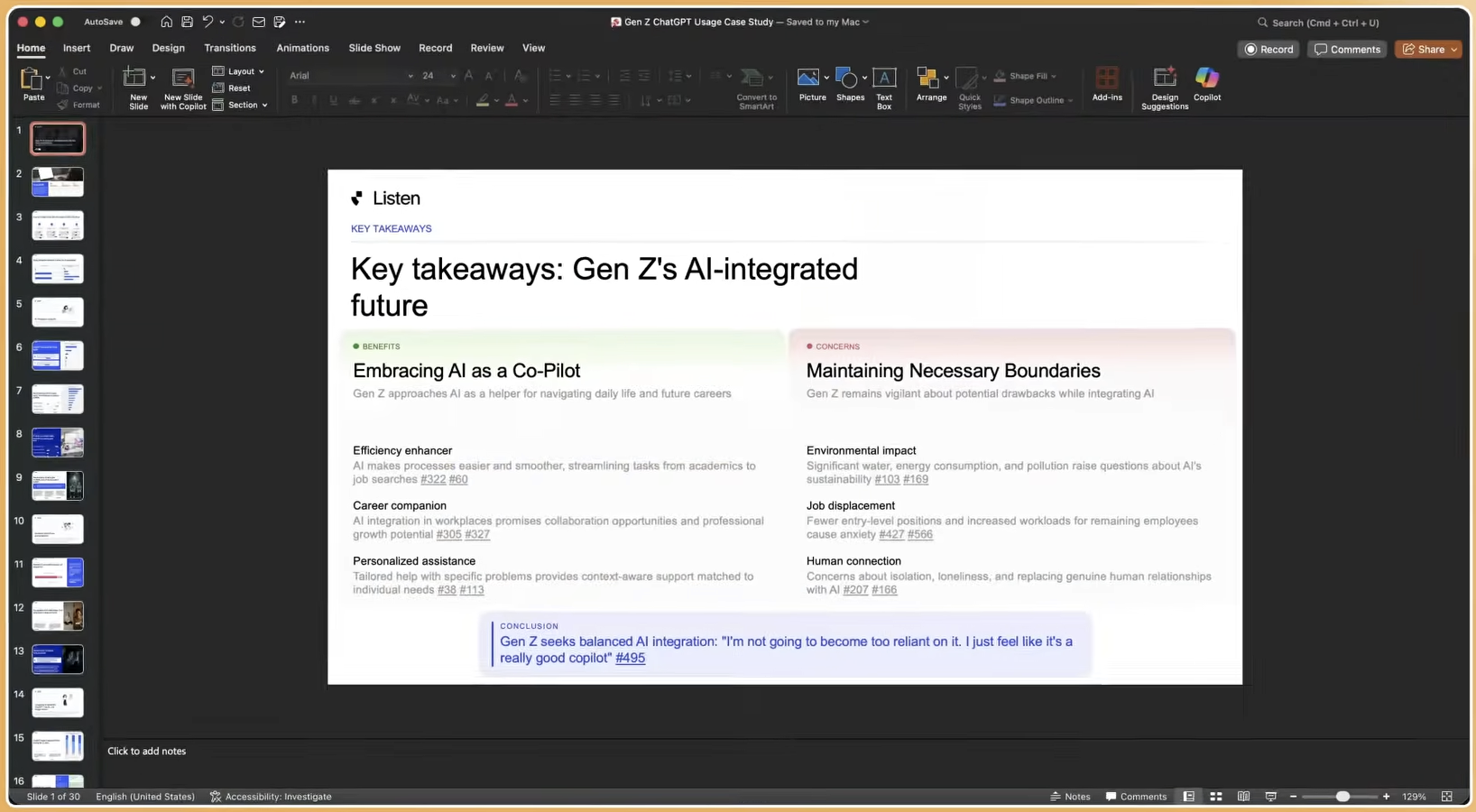
Use each test’s findings to shape the next experiment. A/B testing works best as an ongoing cycle where every test builds on previous insights. Listen Labs’ Mission Control acts as a knowledge repository so teams can query past research, reuse learnings, and grow institutional knowledge over time.
Qual-Informed A/B Testing in Practice
Structured hypothesis formation keeps A/B testing focused and actionable. One strong example: “Replacing the feature comparison table with a use-case based pricing guide will increase trial conversion, because users in exit surveys say they can’t determine which plan is right for them.”
Anthropic applied this approach by interviewing users to understand Claude subscription churn. The qualitative research showed where former users migrate (OpenAI, Gemini) and surfaced 10 “must-fix” items that directly shaped their retention A/B tests.
Robinhood used qual-informed testing to evaluate whether prediction markets feel on-brand. Interviews revealed that users who see betting as “entertainment” rather than income display higher weekly re-engagement. That insight supported targeted feature rollouts to specific user segments.
Explore how enterprises like Microsoft, Anthropic, and Robinhood use Listen Labs to guide their feature testing strategies.
Common A/B Testing Pitfalls for New Features
Avoid these frequent mistakes that weaken A/B test reliability:
Peeking at Results Early: Reviewing interim results and stopping tests early sharply increases false positives. Wait until you reach the planned sample size and duration.
Multiple Testing Without Correction: Running many variations raises the chance that one appears significant by luck. Apply corrections such as Bonferroni or reduce the number of variants.
Sample Ratio Mismatch: Even a split of 50,000 control users and 48,900 variant users in a 50/50 test is flagged as Sample Ratio Mismatch by Kameleoon. Monitor group sizes and investigate imbalances quickly.
Ignoring External Factors: Holidays or PR crises can distort A/B test data because user behavior shifts away from normal patterns. Account for seasonality and major events when planning and interpreting tests.
Insufficient Statistical Power: Underpowered tests risk missing real effects. Estimate required sample sizes before launch and avoid ending tests early.
Listen Labs’ Quality Guard and Emotional Intelligence help teams avoid these pitfalls with real-time quality monitoring and unbiased emotional analysis across hundreds of interviews.
Tracking Lift and Driving Continuous Iteration
Track both immediate performance metrics and long-term adoption patterns for each feature. Tests should run long enough to capture day-of-week behavior patterns so results reflect typical usage.
Listen Labs’ Mission Control supports continuous iteration by tracking customer sentiment and needs over time. Each study enriches the knowledge base, helping teams spot trends and build on earlier insights instead of restarting from zero.
Use Listen Labs’ Mission Control to speed up testing cycles while deepening your understanding of customer behavior.
Best A/B Testing Tools for Combining Qual and Quant
Most A/B testing platforms focus on quantitative metrics and overlook the qualitative insights that create better hypotheses. The table below highlights how Listen Labs uniquely combines scalable qualitative research with emotional analysis that other tools lack.
| Platform | Qual Integration | Speed | Emotional Analysis |
|---|---|---|---|
| Listen Labs | Scalable AI interviews | Hours | Yes (Emotional Intelligence) |
| Optimizely | Limited | Weeks | No |
| Amplitude | Analytics only | Real-time | No |
Listen Labs stands out as an end-to-end platform that combines global participant recruitment (30M+ verified respondents), AI-moderated interviews, emotional analysis, and automated insight generation. This integrated setup replaces multiple vendors and delivers faster, more reliable decisions.
FAQ
How do I define the right metrics for A/B testing new features?
Start from business objectives and map the user journey. Primary metrics should tie directly to feature adoption, such as activation rate, time to first value, or retention. Secondary metrics can track broader impact like overall engagement or satisfaction scores. Use qualitative interviews to learn which outcomes matter most to users and confirm that your chosen metrics reflect real value.
What is the right sample size for A/B testing product features?
Sample size depends on baseline conversion rate, minimum detectable effect, and desired statistical power. For a 5% baseline conversion rate, expect 8,155 to 31,231 users per variant for 80% power to detect 10–20% relative improvements at 95% confidence. Use online calculators and consider running qualitative research first to estimate realistic effect sizes.
How long should I run A/B tests for new features?
Run tests for at least two weeks so you capture weekly behavior patterns, even if you reach significance earlier. Feature adoption often shows delayed effects as users discover and integrate new functionality into their routines. Track both immediate activation and sustained usage over 30 days or more.
Should I test features with all users or specific segments?
Begin with segments most likely to benefit from the feature, based on qualitative research. This focus reduces sample size needs and produces clearer signals. Expand to broader audiences after you prove value with core user groups. Avoid including users unlikely to engage, since they dilute your results.
How do I avoid false positives in feature A/B tests?
Maintain statistical discipline by avoiding early peeks, using proper sample size calculations, and adjusting for multiple testing when you run several variants. Validate surprising results with qualitative feedback and review the business context. If an outcome looks unusually strong, check for measurement issues or external events before acting.
What tools connect qualitative insights with A/B testing?
Listen Labs offers deep integration by running AI-powered interviews that inform hypothesis formation and then tracking emotional responses during testing. Traditional A/B platforms such as Optimizely and VWO focus mainly on quantitative metrics. UserTesting adds some qualitative capabilities but lacks the scale and speed required for modern product development cycles.
Running effective A/B tests on new product features requires combining quantitative rigor with qualitative depth. Teams that integrate customer insights into their testing process, using the steps above, build products users truly value by understanding both behavior and underlying motivations. Listen Labs supports this approach through AI-powered interviews that deliver rapid insights, helping product teams reduce launch risk and prioritize features that resonate.
Start with Listen Labs’ free pilot to upgrade your A/B testing program with qual-at-scale insights.