
Written by: Anish Rao, Head of Growth, Listen Labs | Last updated: April 15, 2026
Key Takeaways
- AI platforms like Listen Labs deliver consultant-quality insights in under 24 hours and replace the 4–6 week cycles of traditional research.
- Leading survey tools include Qualtrics for enterprise depth, SurveyMonkey for AI-assisted insights, and Typeform for conversational design, yet none provide qualitative insights at enterprise scale.
- Data aggregators such as Statista and GWI offer instant secondary data across global topics, which works well for quick market overviews but not for primary research.
- Social listening tools like Brandwatch and Sprinklr excel at sentiment analysis, while free options such as Google Trends support small businesses with basic intelligence needs.
- Listen Labs leads as the #1 end-to-end AI platform with 30M participants; see how Microsoft and P&G achieve 5x faster insights at 1/3 the cost.
2026 Market Research Trends
AI maturity now supports qualitative research at true scale. The global market research industry reached $153 billion in 2025, and many market researchers now use AI-generated synthetic data. Traditional pain points, including research backlogs, fraud risks, and weeks-long cycles, are accelerating adoption of end-to-end AI platforms like Listen Labs that deliver emotional intelligence analysis and 24-hour research cycles.
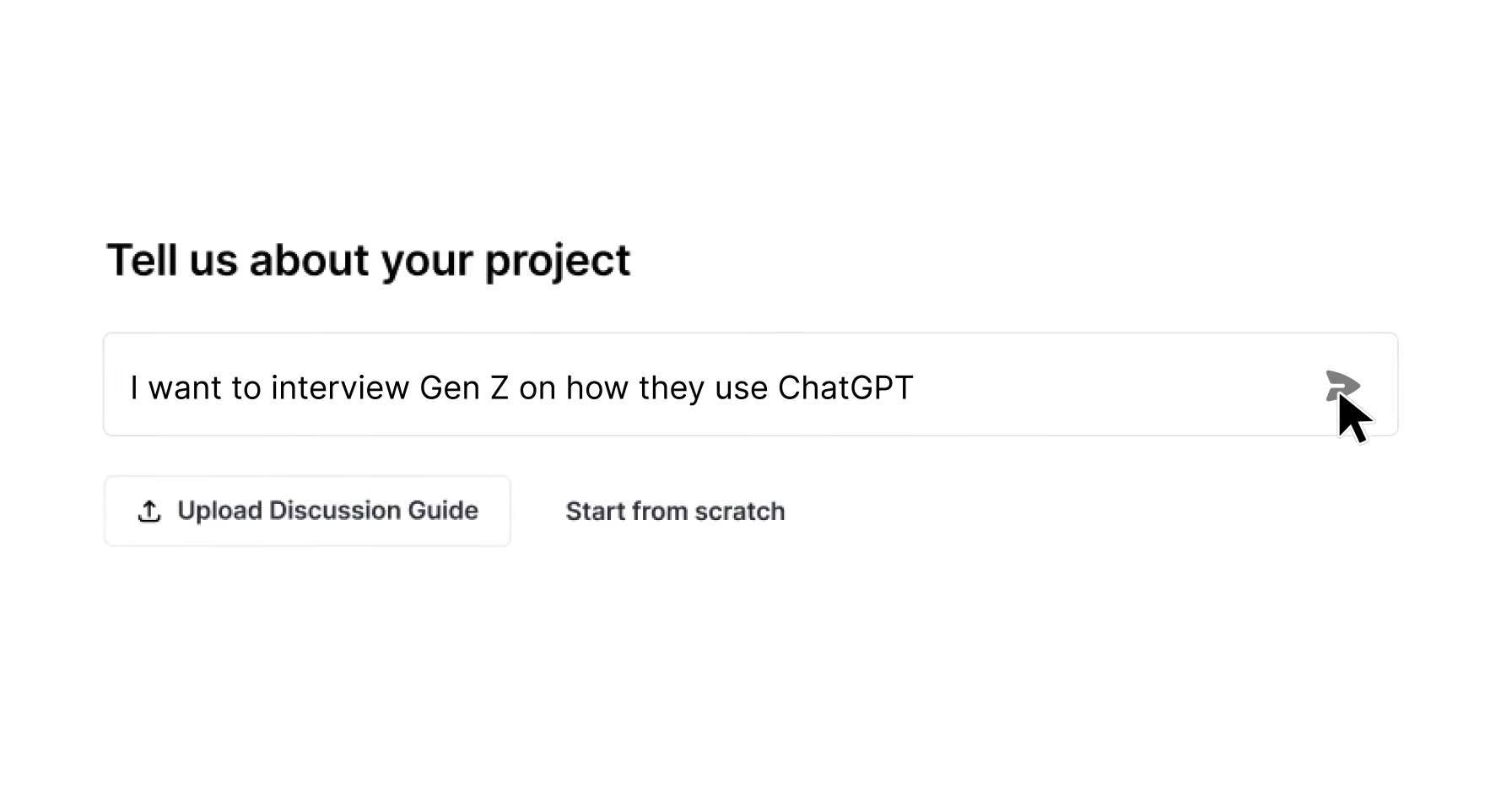
Best Market Research Tools by Category
Survey Platforms for Structured Feedback
Qualtrics provides enterprise-grade research that combines quantitative and qualitative capabilities, which makes it a strong choice for complex experience management. SurveyMonkey offers AI-powered insights with enterprise Team Advantage plans, and Typeform focuses on conversational survey design that improves respondent experience. The table below compares how these tools balance speed, cost, and limitations so you can see where traditional survey platforms fall short for qual-at-scale needs.
| Tool | Speed | Cost | Limits |
|---|---|---|---|
| Qualtrics | Days | Enterprise pricing | Complex setup |
| SurveyMonkey | Same-day | Team Advantage plans | Shallow depth |
| Typeform | Hours | Basic $39/month, Plus $79/month | Limited analytics |
Survey tools work best when you already know which questions to ask and need structured responses at moderate scale. They struggle when you need open-ended exploration, emotional nuance, or rapid iteration across multiple markets.
Data Aggregators for Instant Market Overviews
Statista provides statistics on over 80,000 topics from 22,500+ sources, and Basic plans start at $0/month. GWI offers deep psychographic and attitudinal profiling across 50+ countries. The comparison below highlights how quickly these tools deliver answers and where they fall short for original insight generation.
| Tool | Speed | Cost | Limits |
|---|---|---|---|
| Statista | 2 days custom | $0/month (Basic) | Secondary data only |
| GWI | Instant | Subscription | No primary research |
Data aggregators complement survey tools by providing pre-existing market intelligence across industries. They answer “what is happening” at a high level but cannot explain “why” customers behave a certain way or how they feel about specific experiences.
Competitor Analysis Tools for Search Intelligence
SEMrush and Ahrefs are comprehensive SEO-focused platforms with market research applications. These tools excel at search intelligence, competitive keyword analysis, and share-of-voice tracking. They do not, however, capture qualitative depth about customer motivations or emotional drivers behind search behavior.
Social Listening Platforms for Real-Time Sentiment
Brandwatch monitors 500 million+ public posts daily from 100 million+ sources and offers multi-language sentiment analysis plus generative AI summaries. Sprinklr supports enterprise-scale omnichannel monitoring for large organizations managing multiple brands. These platforms reveal how customers talk about brands in the wild, which makes them powerful for reputation tracking and campaign measurement.
Social listening adds an always-on layer to your research stack but still relies on unstructured public data. It rarely replaces targeted studies where you control the audience, questions, and context.
Free Tools for Small Business Market Insights
Google Trends remains a leading free option for trend analysis, and AnswerThePublic provides query insights that support content planning. These tools give small businesses a starting point for basic market intelligence, yet they lack the depth and scale required for high-stakes enterprise decisions.
Free tools work well for directional validation and idea generation. Growing companies eventually need platforms that deliver reliable, decision-ready customer insights rather than surface-level patterns.
AI-Powered Platforms for Qual-at-Scale
AI-powered platforms now unify recruitment, data collection, and analysis into a single workflow. Listen Labs leads this category as the #1 end-to-end AI research platform. With its extensive participant network across 45+ countries, Listen Labs delivers automated analysis from raw data to final deliverables in under 24 hours. The platform’s Emotional Intelligence feature analyzes tone, word choice, and micro-expressions across numerous languages, and Quality Guard maintains zero fraud through real-time monitoring.
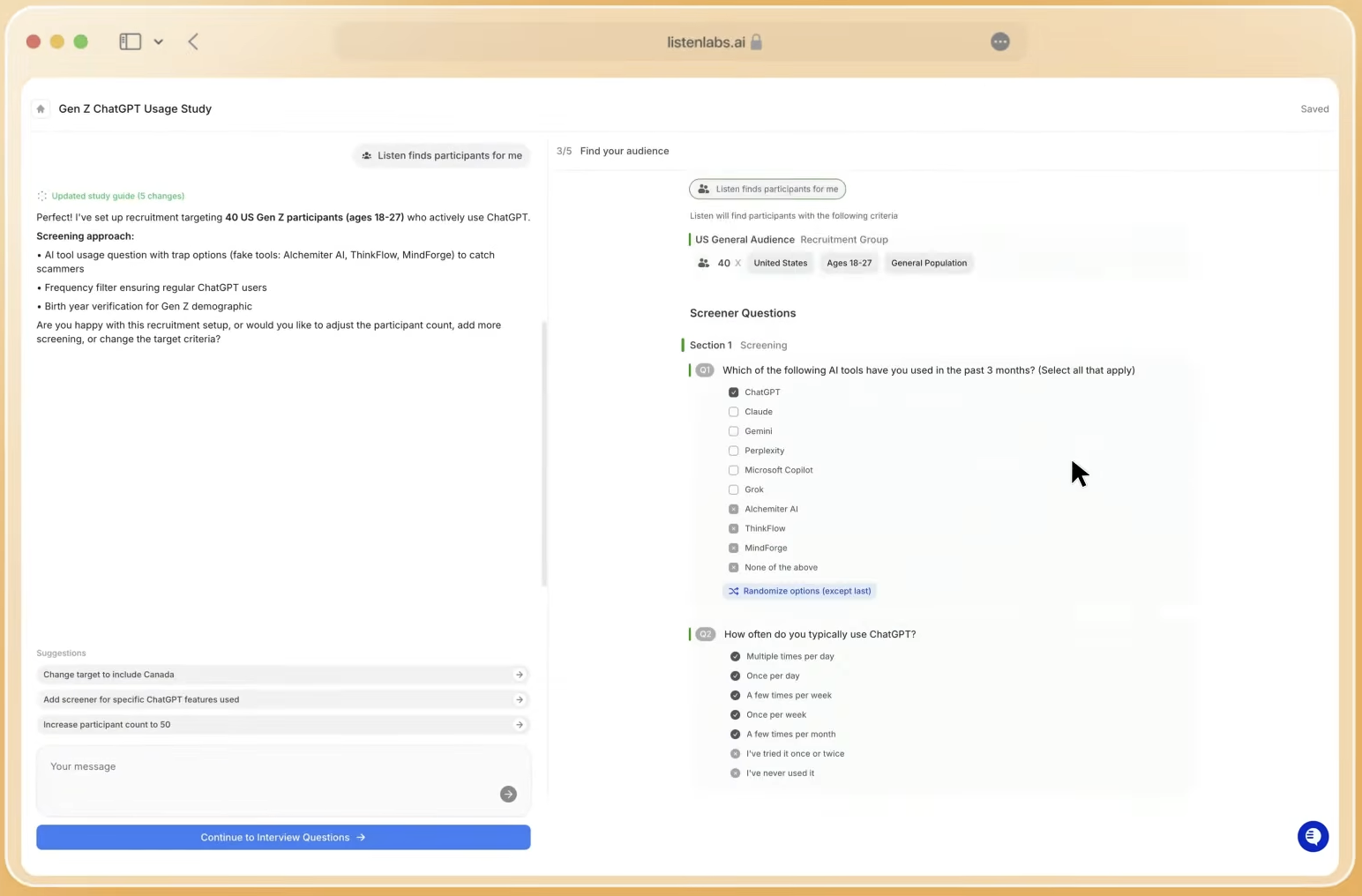
The comparison below shows how Listen Labs combines speed, scale, and completeness in ways that point solutions like UserTesting and Dovetail cannot match.
| Feature | Listen Labs | UserTesting | Dovetail |
|---|---|---|---|
| Time to Insights | <24 hours | Weeks | N/A (post-research) |
| Scale | 30M participants/45+ countries | Small panel | N/A |
| Cost vs Traditional | 1/3 cost | Higher | Fragmented pricing |
| End-to-End | Complete platform | Moderation only | Analysis only |
Enterprise case studies demonstrate Listen Labs’ impact. Microsoft reduced research timelines from weeks to hours, and P&G accelerated product validation cycles. See these capabilities in action.
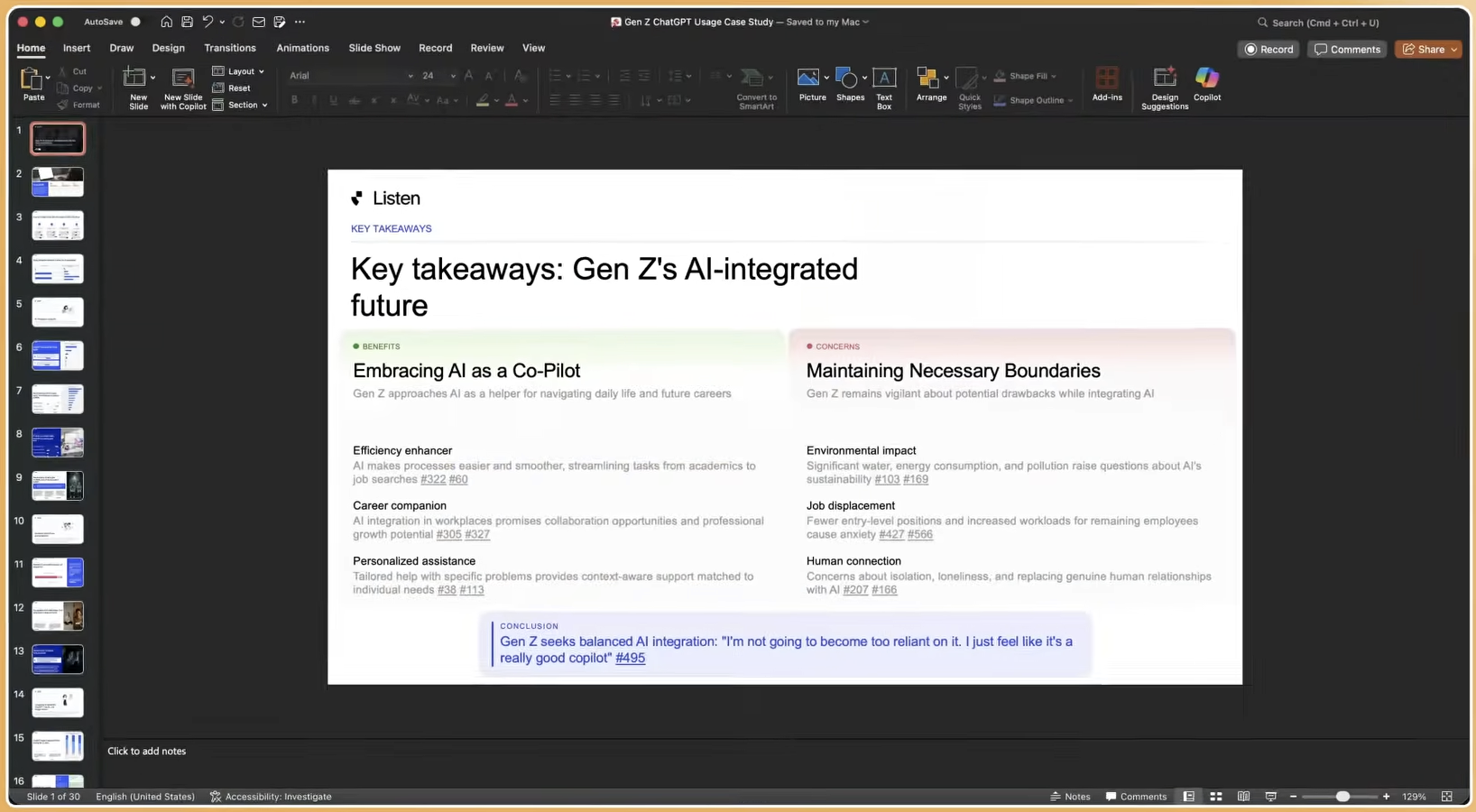
Why Listen Labs Is the Strongest Enterprise Choice for 2026
Listen Labs reshapes the entire research lifecycle through its end-to-end AI platform. The Research Agent handles the full analysis workflow from raw data to stakeholder-ready deliverables, which removes the manual analysis bottleneck that slows traditional research teams. This automation allows Mission Control to function as an organizational knowledge base, surfacing cross-study patterns that would remain hidden when each project takes weeks to complete.
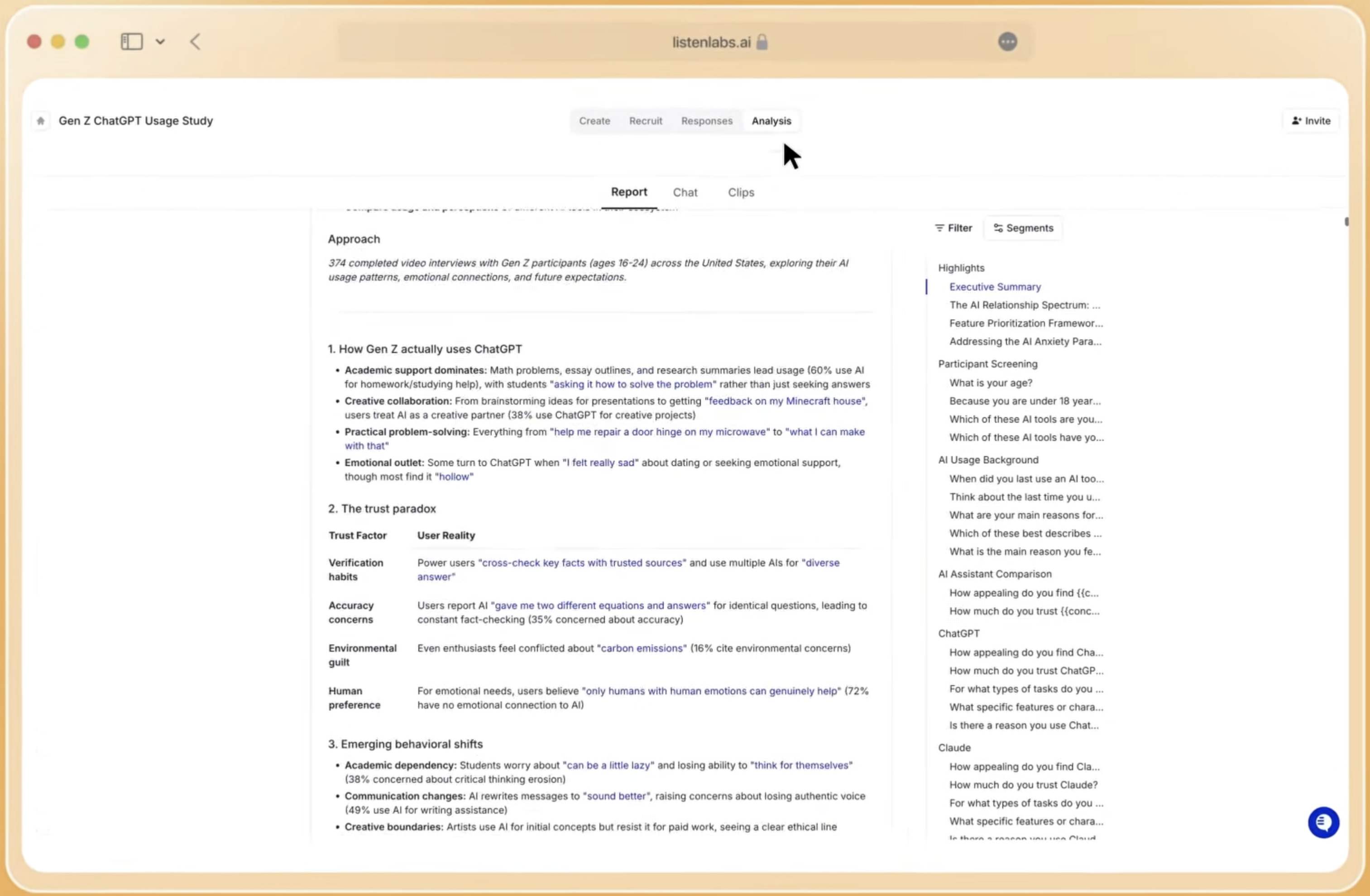
SOC2, GDPR, and ISO compliance, combined with support for 90+ languages, ensures that this speed does not compromise security or global reach. Listen Labs therefore meets enterprise requirements for governance and localization that many point tools cannot satisfy.
The platform’s research expertise maintains methodological rigor while still delivering the speed and scale modern enterprises expect. Experience qual-at-scale research firsthand.
Choosing the Right Tool: Decision Framework
Company stage and research maturity should guide your tool selection. Small businesses can start with free tools like Google Trends for basic market intelligence, which provides directional insight without upfront cost. As organizations grow and need to validate specific product or marketing decisions, mid-market companies benefit from survey platforms such as SurveyMonkey or Typeform that support structured feedback from targeted audiences.
Enterprises that require deep customer insights at scale face a different challenge. Traditional survey tools force a trade-off between depth, which relies on small samples and slow timelines, and scale, which often produces shallow findings. These organizations should prioritize end-to-end AI platforms like Listen Labs that remove this trade-off and deliver rich insights in hours instead of weeks.
FAQ
What is the best AI tool for market research in 2026?
Listen Labs stands out as the leading AI market research platform and offers clear advantages over general-purpose tools like ChatGPT. ChatGPT lacks proprietary research data and cannot recruit participants or conduct structured interviews. In contrast, Listen Labs provides a complete research lifecycle with its 30M participant network and full-stack AI capabilities. The platform’s Research Agent, Quality Guard, and Emotional Intelligence features are purpose-built for market research and deliver consultant-quality insights that general AI tools cannot replicate.
What are the best free market research tools for small businesses?
Google Trends leads free market research tools by providing trend analysis and search volume data across regions and time periods. AnswerThePublic adds valuable query insights that support content and SEO strategy. Free tools, however, lack the depth, sample control, and advanced analytics required for strategic decisions. Small businesses with growth ambitions should plan to graduate to platforms that provide actionable customer insights rather than relying only on surface-level trend data.
How do enterprise market research tools ensure data security and compliance?
Enterprise-grade market research platforms must meet stringent security standards such as SOC2 Type II compliance. Listen Labs maintains SOC2 Type II compliance and ensures customer data is never used for AI model training. The platform uses advanced encryption and enterprise SSO capabilities to protect access. Quality Guard’s real-time fraud detection also protects data integrity by removing fraudulent responses that could undermine research validity.
Can AI market research tools really match human researcher quality?
Modern AI research platforms like Listen Labs can match the methodological rigor of experienced research teams while exceeding them on speed and scale. The platform’s research expertise guides proper study design and analysis so AI outputs align with established best practices. AI-moderated interviews capture conversational depth comparable to human moderators, reduce interviewer bias, and enable simultaneous global research across languages and time zones.
What should enterprises expect to pay for AI market research tools?
Enterprise AI research platforms typically use subscription models with credit-based participant recruitment. Listen Labs offers platform access with included studies and credits, and additional credits vary by audience complexity. While specific pricing requires consultation, enterprises generally achieve significant cost savings compared to traditional research methods while dramatically increasing research output and speed to insights.
Conclusion
The market research landscape has fundamentally shifted in 2026, and AI-powered platforms like Listen Labs now lead the move from slow, expensive methods to rapid, scalable qual-at-scale research. Enterprises can no longer rely on the traditional research timelines mentioned earlier when competitive advantage depends on real-time customer understanding. Join industry leaders who have already transformed their research capabilities.