
Written by: Anish Rao, Head of Growth, Listen Labs | Last updated: April 15, 2026
Key Takeaways
- PostHog, Statsig, and GrowthBook work well for startups that need free tiers, feature flags, and warehouse integrations like Snowflake and BigQuery.
- Amplitude, Eppo, and Optimizely fit enterprise teams that need advanced statistics, behavioral targeting, and large-scale experimentation.
- Server-side A/B testing handles product logic such as pricing and algorithms, avoids client-side flicker, and supports mobile experiments.
- Run experiments for at least 1–2 weeks with sample sizes planned at 95% confidence to cover business cycles and reduce false positives.
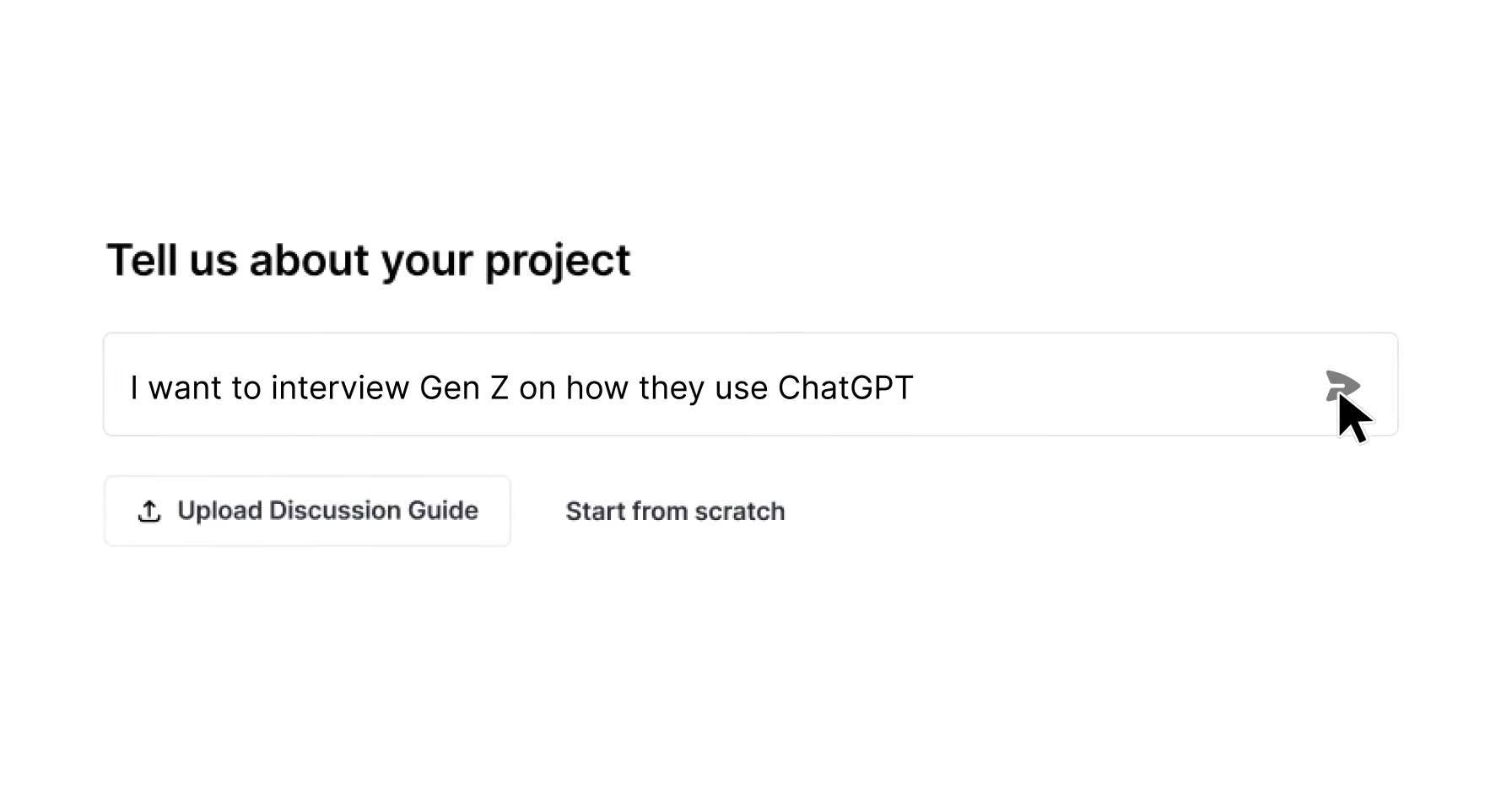
- Pair quantitative A/B results with Listen Labs for AI-moderated market research interviews, and see how it works in a 15-minute demo to uncover the “why” in 24 hours.
Head-to-Head Comparison Matrix
The table below compares eight leading A/B testing platforms across three practical dimensions: feature flag support, data warehouse integrations, and starter pricing. Notice that nearly all tools support feature flags, while pricing splits between generous free tiers for startups and custom quotes for enterprise buyers.
| Tool | Feature Flags | Warehouse Integrations | Pricing (Starter) |
|---|---|---|---|
| PostHog | Yes | Snowflake, BigQuery | Free (1M events) |
| Statsig | Yes | Snowflake, BigQuery | Free (2M events per month) |
| GrowthBook | Yes | Snowflake, BigQuery, Redshift | Free OSS |
| Amplitude | Yes | Native + warehouses | Free tier |
| Eppo | Yes | Snowflake, BigQuery, Databricks, and Redshift | Custom pricing |
| Optimizely | Yes | Warehouse support | Custom pricing |
| LaunchDarkly | Yes | Snowflake+ | Free forever |
| Experiment.com | No | No | N/A |
Startup-Friendly Experimentation Platforms
1. PostHog
PostHog delivers a unified platform that combines product analytics, session replay, and A/B testing with feature flags. The 2026 release adds AI-powered session insights that automatically surface user friction points. Pros include a comprehensive free analytics tier and robust feature flagging. Cons include a steeper learning curve for developers who are new to the ecosystem. Startup teams often use PostHog for onboarding flow experiments and user activation tests, then pair it with Listen Labs to run numerous market research interviews overnight and explain surprising quantitative results.
2. Statsig
Statsig, built by an ex-Facebook engineer, offers enterprise-grade experimentation through its Pulse statistical engine. The platform provides 500 million free events per month, which suits growth-stage startups with rising traffic. Pros include a generous free tier and sophisticated statistical diagnostics that help teams avoid false wins. Cons relate to a less visual interface compared to drag-and-drop competitors. Growth teams rely on Statsig for rapid iteration on acquisition funnels and retention experiments.
3. GrowthBook
GrowthBook stands out as a leading open-source, warehouse-native A/B testing platform. It connects directly to existing data warehouses like Snowflake, BigQuery, and Redshift, which removes data duplication concerns. Pros include no vendor lock-in and transparent statistical methods that data teams can audit. Cons include the need for self-hosting infrastructure and technical setup. 4,438 live websites currently use GrowthBook, which reflects growing adoption among engineering-first teams that want budget-conscious experimentation.
These startup-focused tools prioritize affordability and speed of setup. As experimentation programs mature, many teams shift toward platforms that emphasize deeper statistics, advanced targeting, and dedicated support.
Enterprise-Grade Experimentation Platforms
4. Amplitude Experiment
Amplitude Experiment integrates A/B testing directly with behavioral analytics so teams can run experiments and measure results with consistent event definitions. The platform excels at behavioral targeting and cross-platform attribution. Pros include unified analytics and real-time segmentation that supports complex user journeys. Cons include potential ecosystem lock-in and complex pricing at higher volumes. Enterprise teams use Amplitude for detailed user journey optimization and feature adoption experiments that span web and mobile.
5. Eppo
Eppo focuses on warehouse-native experimentation with advanced statistical methods such as sequential testing and CUPED variance reduction. The platform runs experiments directly on data warehouses and reuses existing metric definitions. Pros include strong statistical rigor and reduced sample size requirements. Cons include a need for data-mature organizations with established warehouse infrastructure. Data teams at scale use Eppo for complex multi-metric experiments and variance reduction techniques that improve sensitivity.
6. Optimizely
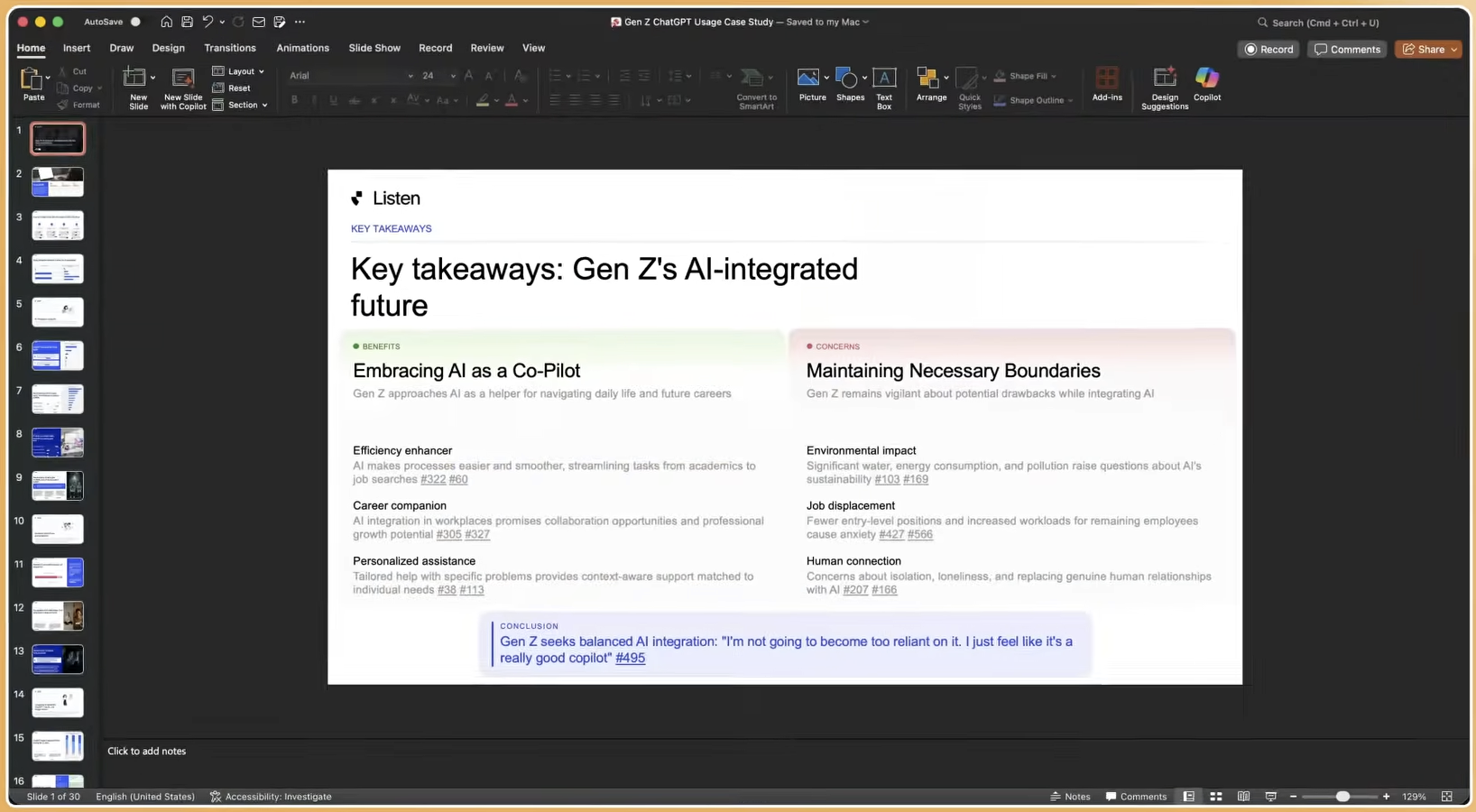
Optimizely provides full-stack experimentation with a Bayesian statistical engine and comprehensive feature management. Named a Forrester Wave™ DXP Leader in Q4 2025, the platform supports both client-side and server-side testing. Pros include enterprise-grade scalability and advanced targeting capabilities. Cons include premium pricing and complex implementation that often require dedicated support. Enterprise teams use Optimizely for large-scale rollouts and sophisticated personalization campaigns, then bring in Listen Labs to test concepts with numerous users through AI-moderated market research interviews, as seen in Microsoft case studies.
Feature Flag Specialists and Free Options
7. LaunchDarkly
LaunchDarkly pioneered feature flag management and later added integrated A/B testing capabilities. The platform excels at controlled rollouts, kill switches, and deployment risk mitigation. Pros include robust developer workflows and strong deployment controls that reduce release risk. Cons include basic statistical capabilities compared to dedicated experimentation platforms. Engineering teams rely on LaunchDarkly for feature releases and gradual rollouts that tie directly to business metrics.
8. Experiment.com
Experiment.com focuses on simple feature flagging and straightforward A/B testing for mid-market teams. The platform offers easy setup and clear documentation that non-technical users can follow. Pros include a user-friendly interface and transparent pricing. Cons include fewer advanced integrations than enterprise platforms. Mid-market product teams use Experiment.com for basic feature testing and simple conversion optimization.
Open-source options such as GrowthBook and PostHog give early teams serious experimentation power without heavy license fees. GrowthBook appears on 4,438 live websites, and PostHog’s free tier eases budget constraints for early-stage teams, so both tools solve the common startup pain point of expensive experimentation infrastructure.
Implementation Checklist and Real-User Tips
Strong implementation makes a bigger impact than tool choice alone. Before launching your first experiment, calculate sample size requirements using 95% confidence levels and 80% statistical power, which tells you how much traffic you need. Based on that calculation, plan minimum 1–2 week test durations so you capture full business cycles and reach statistical significance. After sizing your experiment, test SDK integration in staging environments to catch tracking errors before they affect production data. Finally, configure warehouse connections so your success metrics stay consistent across all experiments. Common developer bottlenecks appear during initial setup, especially around event tracking and user assignment logic.
Sound statistics protect teams from misleading results. Avoid peeking at interim results unless you have sequential testing enabled, because early checks inflate false positive rates. Keep success metrics consistent across teams so experiments remain comparable over time. Document experiment hypotheses and success criteria before launch, and define clear Overall Evaluation Criteria (OEC) to prevent post-hoc metric selection and to keep decisions actionable.
Why Pair with Listen Labs for the “Why” Behind Results
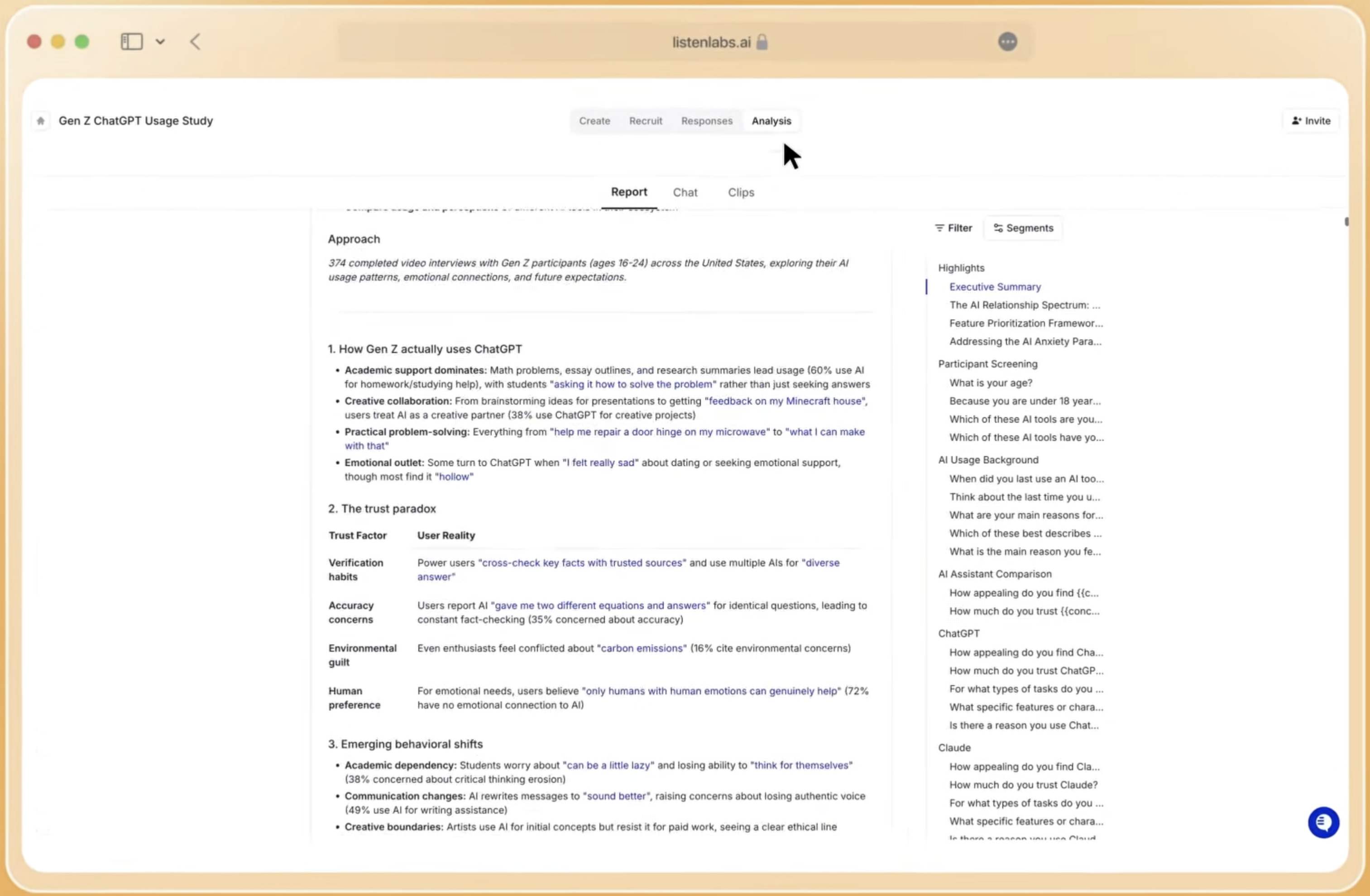
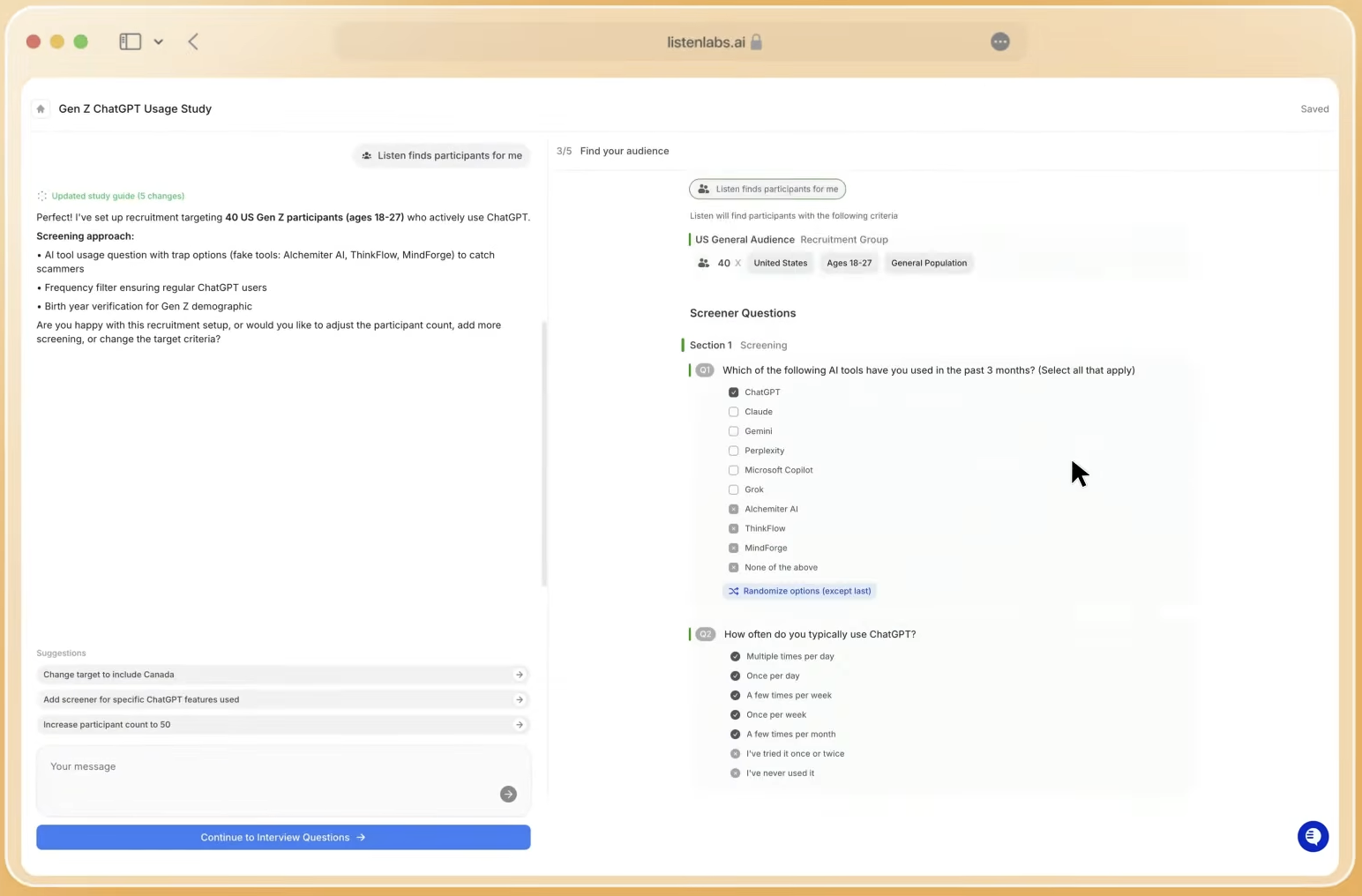
A/B testing reveals what happened, and Listen Labs explains why it happened through AI-moderated market research. The platform recruits from a 30M+ verified participant network, conducts in-depth interviews and delivers insights in hours, not weeks, and applies Emotional Intelligence based on Ekman’s framework to surface subconscious reactions. Research Agent produces consultant-quality insights, highlight reels, and statistical analysis that teams can share quickly. Case studies include Anthropic’s 5x faster churn analysis and P&G’s product claim validation. Schedule a walkthrough to see how Listen Labs can accelerate your full-funnel optimization strategy.
Frequently Asked Questions
What are the best free A/B testing tools for product experiments in 2026?
GrowthBook leads open-source options with warehouse-native architecture and transparent statistical methods, while PostHog offers comprehensive free tiers that include analytics and feature flags. Statsig’s generous free tier, mentioned earlier, makes it suitable for growth-stage startups with rising traffic. These platforms remove budget barriers while keeping enterprise-grade statistical rigor and developer-friendly APIs.
Should product teams use server-side or client-side A/B testing?
Server-side testing works best for product experiments that involve core business logic, pricing models, search algorithms, and API responses. Unlike client-side testing, server-side experiments avoid flicker effects, support backend functionality tests, and allow mobile app experiments without app store approval delays. Product teams should prioritize server-side capabilities when they test fundamental product mechanics.
How can teams combine A/B testing with qualitative research for deeper insights?
Listen Labs helps teams validate A/B test results through AI-moderated market research interviews in under 24 hours. Quantitative experiments reveal statistical significance, and qualitative research uncovers user motivations, emotional responses, and unexpected friction points. This combination prevents misguided rollouts based on incomplete data and speeds up product iteration cycles.
What factors should guide A/B testing tool selection for different company stages?
Startups should prioritize free tiers, easy setup, and integrated analytics to keep infrastructure overhead low. Growth-stage companies need scalable event limits, advanced segmentation, and warehouse integrations that support more complex analysis. Enterprises require sophisticated statistical methods, feature flag management, and cross-platform consistency. Teams should choose tools based on current traffic volume, technical resources, and experimentation maturity instead of aspirational future needs.
How long should product experiments run to achieve reliable results?
Product experiments should run long enough to capture full business cycles and reach statistical significance. Teams can pre-calculate sample sizes using baseline conversion rates, minimum detectable effects, and desired confidence levels, then map those numbers to expected traffic. Avoid stopping tests early based on interim results unless sequential testing methods are in place, because premature conclusions inflate false positive rates.
Decision Framework Checklist
Tool selection should follow a simple decision path. First, evaluate your company stage, required integrations, and statistical needs. Next, match tools to that stage, such as PostHog or Statsig for startups and Optimizely or Eppo for enterprises that need advanced capabilities. Finally, pair any quantitative platform with Listen Labs for qualitative validation at scale, and request a tailored demo to accelerate product iteration cycles through combined quantitative and qualitative insights.