

Written by: Anish Rao, Head of Growth, Listen Labs
Key Takeaways
- AI now powers most qualitative analysis in 2026, with 95% of researchers using it for transcription, pattern detection, and theme identification.
- The seven-step process of preparation, familiarization, coding, theme development, review, definition, and reporting becomes dramatically faster with AI acceleration.
- Thematic, content, and grounded theory methods now scale to thousands of interviews, with AI emotion detection deepening insight quality.
- Listen Labs provides an end-to-end AI research platform with 30M+ participants, Research Agent automation, and Emotional Intelligence for enterprise-grade analysis.
- AI reduces bias and scale limits in qualitative research; explore a Listen Labs demo to see qual-at-scale in action.
The 7 Steps of Qualitative Data Analysis
Modern qualitative data analysis follows a structured seven-step process that combines proven methodological frameworks with AI acceleration. Braun and Clarke’s reflexive thematic analysis provides the foundation for systematic pattern identification across interview data.
The first four steps show the most dramatic impact from AI support, especially when projects involve hundreds or thousands of interviews. The comparison below highlights how AI changes effort and timelines during these early stages.
| Step | Manual Method | AI-Accelerated Approach | Time Savings |
|---|---|---|---|
| 1. Data Preparation | File organization, transcription (days) | Auto-import, instant transcription | <1 hour |
| 2. Data Familiarization | Reading transcripts multiple times | AI summary with key insights | 90% reduction |
| 3. Initial Coding | Manual line-by-line coding | Research Agent auto-codes objectively | Hours vs. weeks |
| 4. Theme Development | Grouping codes manually | AI pattern recognition across 1000s responses | 85% faster |
Step 1: Data Preparation and Organization covers collecting, organizing, and transcribing interview recordings. Manual transcription often stalls projects for days and consumes budget that could support more interviews. AI platforms like Listen Labs automatically import video interviews and generate accurate transcriptions across 100+ languages, which removes this traditional bottleneck and frees teams to focus on analysis.
Step 2: Data Familiarization requires researchers to immerse themselves in the data through repeated reading. Traditional manual analysis of large datasets can take 255 hours before coding even begins. AI tools provide instant summaries, highlight key moments, and surface initial patterns, so researchers can reach a working understanding of the dataset much faster while still reviewing critical verbatims.
Step 3: Initial Coding identifies meaningful data segments and assigns descriptive codes. Manual line-by-line coding across hundreds of interviews introduces fatigue and inconsistency. Listen Labs’ Research Agent performs automated coding across thousands of interviews simultaneously and applies the same criteria every time, which supports objectivity while still allowing researchers to refine and adjust the codebook.
Step 4: Theme Development groups related codes into broader patterns that explain what is happening in the data. Large datasets can overwhelm manual analysis at this stage because relationships between codes become difficult to track. AI identifies themes across massive datasets, and Listen Labs’ Emotional Intelligence adds quantified emotion detection using Ekman’s universal emotions framework across 50+ languages, which enriches each theme with emotional context.
Step 5: Theme Review and Refinement validates themes against the original data to confirm accuracy and coverage. At this stage, analysts move from development to quality control. AI maintains perfect traceability, linking every theme back to specific timestamps and verbatim quotes, which makes verification and refinement faster and more transparent.
Step 6: Theme Definition and Interpretation develops clear theme definitions with supporting evidence. Research Agent generates comprehensive theme descriptions that include quantified emotional context and curated participant quotes, giving stakeholders concise narratives backed by traceable data.
Step 7: Report Generation produces final deliverables including slide decks, highlight reels, and executive summaries. AI-assisted analysis achieves 64% time savings compared to manual approaches while maintaining analytical rigor, which shortens feedback loops between research and decision-making.
Leading Qualitative Data Analysis Methods in 2026
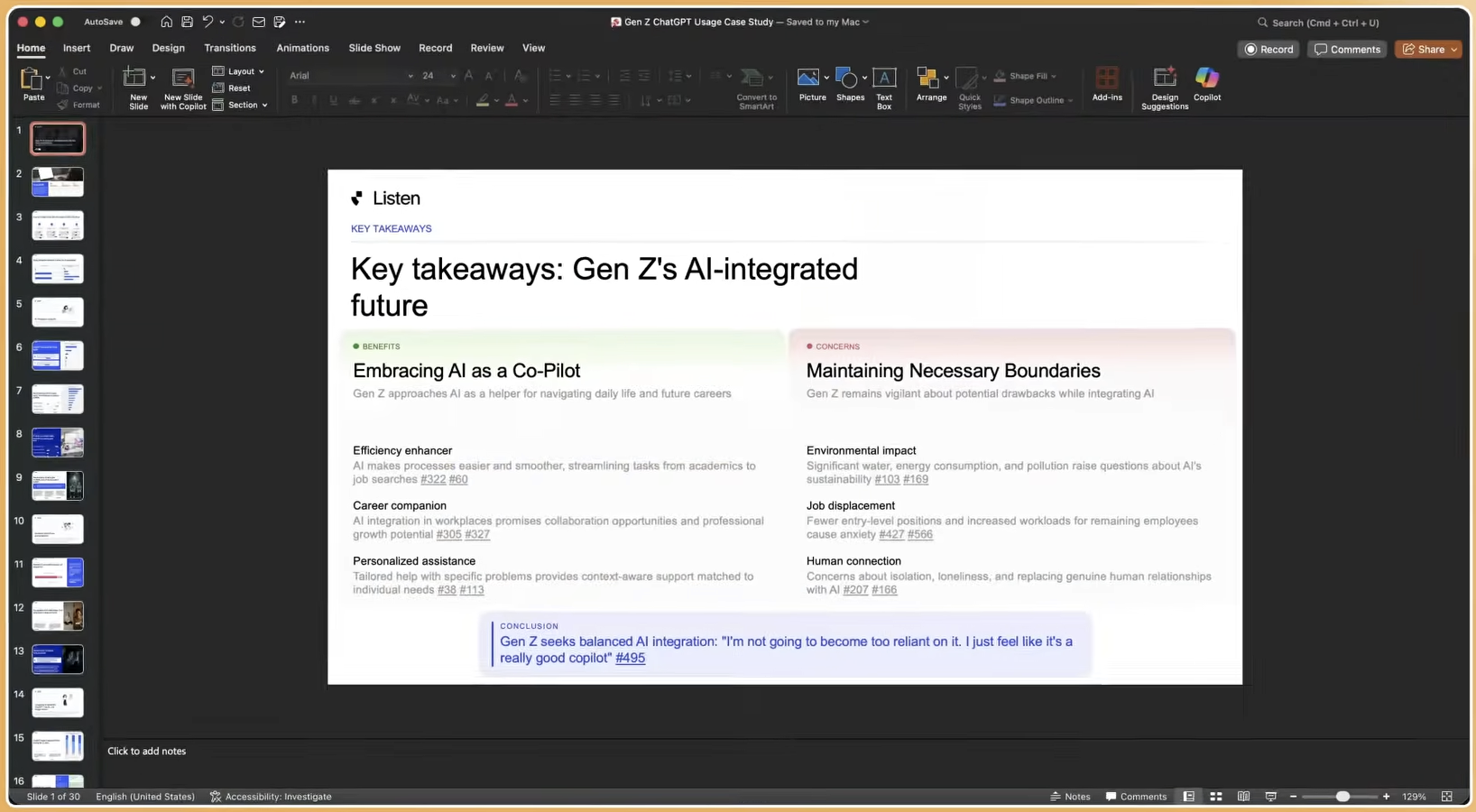
The most widely used qualitative analysis methods in 2026 include thematic analysis for pattern identification, content analysis for systematic categorization, grounded theory for theory development, narrative analysis for story structure examination, and discourse analysis for language use patterns.
Thematic Analysis remains the most flexible method, identifying recurring patterns across interviews, focus groups, and surveys. AI platforms scale thematic analysis to hundreds of interviews while preserving the depth that used to be limited to small samples.
Content Analysis systematically categorizes large volumes of textual data and works especially well for open-ended survey responses and social media content. AI automation enables content analysis of thousands of responses in minutes rather than weeks, which supports continuous tracking of customer sentiment.
Grounded Theory develops theoretical frameworks directly from data through iterative coding and constant comparison. Listen Labs enables qual-at-scale approaches that eliminate the traditional trade-off between depth and scale, so grounded theory can now draw on much larger and more diverse datasets.
AI enhancement strengthens all of these traditional methods by adding multimodal analysis capabilities. Listen Labs’ Emotional Intelligence analyzes tone, word choice, and micro-expressions to surface emotions that transcripts alone miss, which provides richer context for theme development across every methodological approach.
Best Qualitative Data Analysis Software and Tools for 2026
Choosing the right methodology only solves part of the challenge, because teams also need software that can execute these approaches at scale. The qualitative analysis software landscape has evolved dramatically as AI integration has become standard. Traditional tools still demand significant manual effort, while AI-powered platforms now support end-to-end automation from recruitment through reporting.
The following comparison shows how leading platforms differ on scale capability, AI analysis features, and coverage of the full research lifecycle.
| Tool | Scale Capability | AI Analysis | End-to-End Platform |
|---|---|---|---|
| NVivo/ATLAS.ti | Large enterprise datasets | Advanced AI features | Comprehensive analysis tools |
| Dovetail | Repository focus | Extensive AI automation | Analysis, storage, and integrations |
| Listen Labs | 1000s interviews | Research Agent + Emotional Intelligence | Complete research lifecycle |
Traditional CAQDAS Tools like NVivo and ATLAS.ti offer advanced coding, AI assistance, visualization, and collaboration features, yet they still require separate recruitment, moderation, and transcription solutions. These tools work well for complex academic and enterprise research where teams already manage fieldwork elsewhere. They do not, however, provide integrated research execution, which means researchers must stitch together multiple vendors and workflows to complete a study.
Repository Tools like Dovetail organize research with AI-driven analysis and workflow integrations but do not conduct new studies. They serve as active intelligence platforms that centralize findings, automate tagging, and connect insights to product and design tools.
Listen Labs represents the next generation of qualitative analysis platforms. It combines global participant recruitment from 30M+ verified respondents, AI-moderated interviews, automated analysis via Research Agent, and emotion detection through Emotional Intelligence. The platform also delivers SOC2-compliant enterprise security trusted by Microsoft and Procter & Gamble, which makes it suitable for sensitive customer and employee research.
ChatGPT for Qualitative Data Analysis
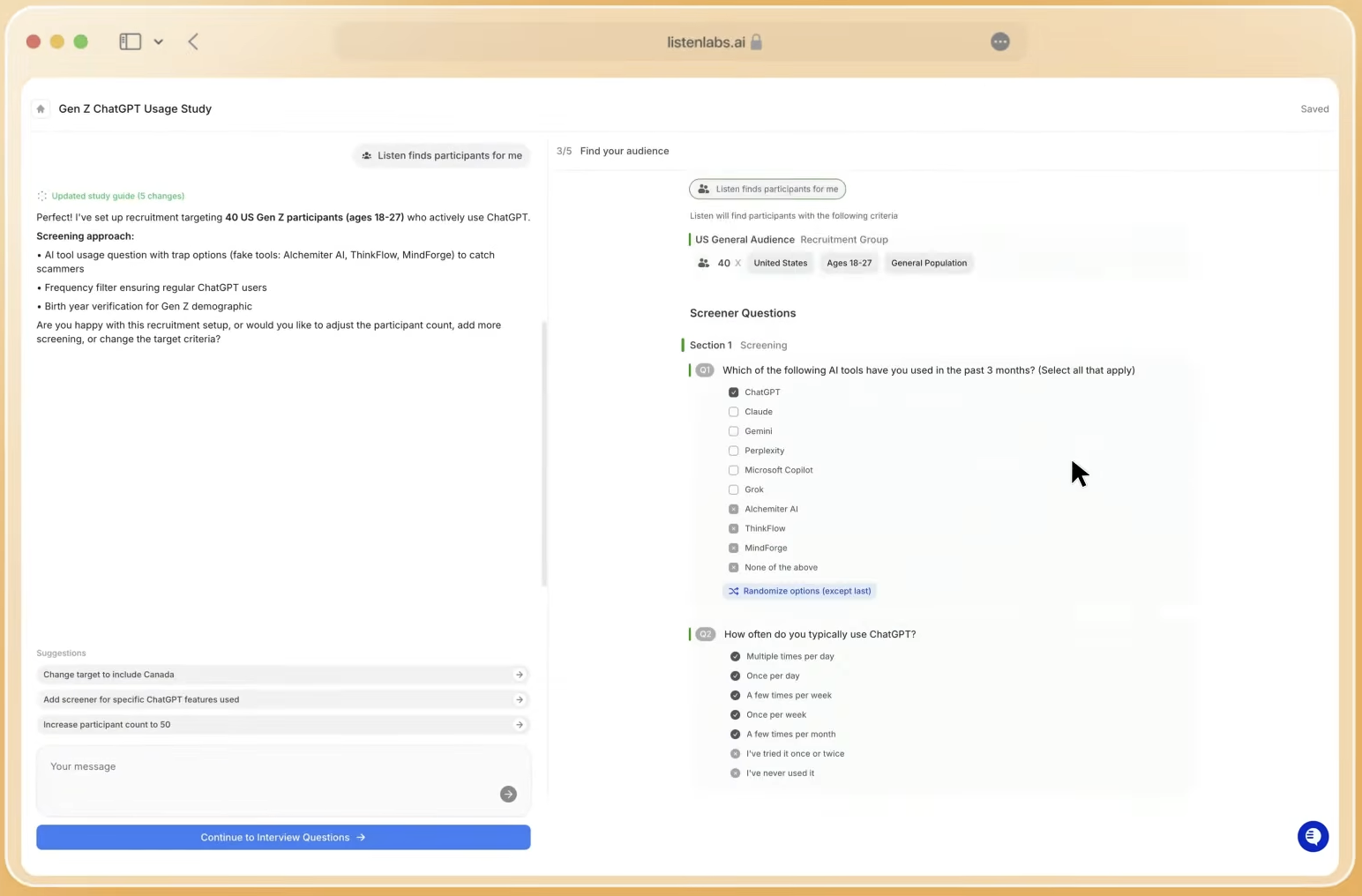
ChatGPT supports early-stage qualitative tasks such as coding suggestions and theme brainstorming but does not replace specialized research platforms. General-purpose LLMs cannot access proprietary participant networks, conduct interviews, enforce quality controls, or embed methodological safeguards. Listen Labs combines the conversational AI capabilities researchers value in ChatGPT with purpose-built research infrastructure and proven enterprise reliability.
Common Pitfalls in Qualitative Data Analysis and AI Solutions
Five critical pitfalls plague traditional qualitative analysis: researcher bias from subjective interpretation, time-intensive manual processes, scale limitations that prevent large sample analysis, inadequate data quality from poor recruitment, and siloed insights that do not build institutional knowledge.
Researcher Bias occurs when analysts unconsciously emphasize findings that confirm existing hypotheses. Subjective interpretation affects research credibility, while AI analysis applies consistent criteria across all interviews without human preconceptions, which supports more balanced findings.
Time Constraints force researchers to choose between depth and speed. Manual analysis of moderate datasets can require months, which creates backlogs that frustrate stakeholders. AI platforms compress analysis cycles from weeks to hours while preserving the depth needed for confident decisions.
Scale Limitations restrict traditional qualitative research to small samples that may not represent broader populations. Listen Labs enables simultaneous analysis of hundreds of interviews, which improves statistical confidence while maintaining qualitative richness.
Quality Issues from commodity panels filled with professional survey-takers undermine research validity. Listen Labs addresses this through two complementary safeguards. Quality Guard monitors every interview in real time for fraud detection, catching professional respondents who attempt to game the system. Additionally, limiting participants to three studies monthly prevents the panel fatigue that degrades response quality over time.
Knowledge Silos prevent organizations from building on previous research insights. Mission Control serves as an institutional knowledge base, enabling cross-study queries and trend tracking that traditional approaches cannot support. See how Listen Labs eliminates these research challenges in a personalized demo.
Qualitative Data Analysis Example with AI
Procter & Gamble demonstrates AI-powered qualitative analysis in practice. The consumer goods company needed to evaluate how men respond to new product claims before market launch. Traditional research would have required weeks of recruiting, interviewing, and manual analysis.
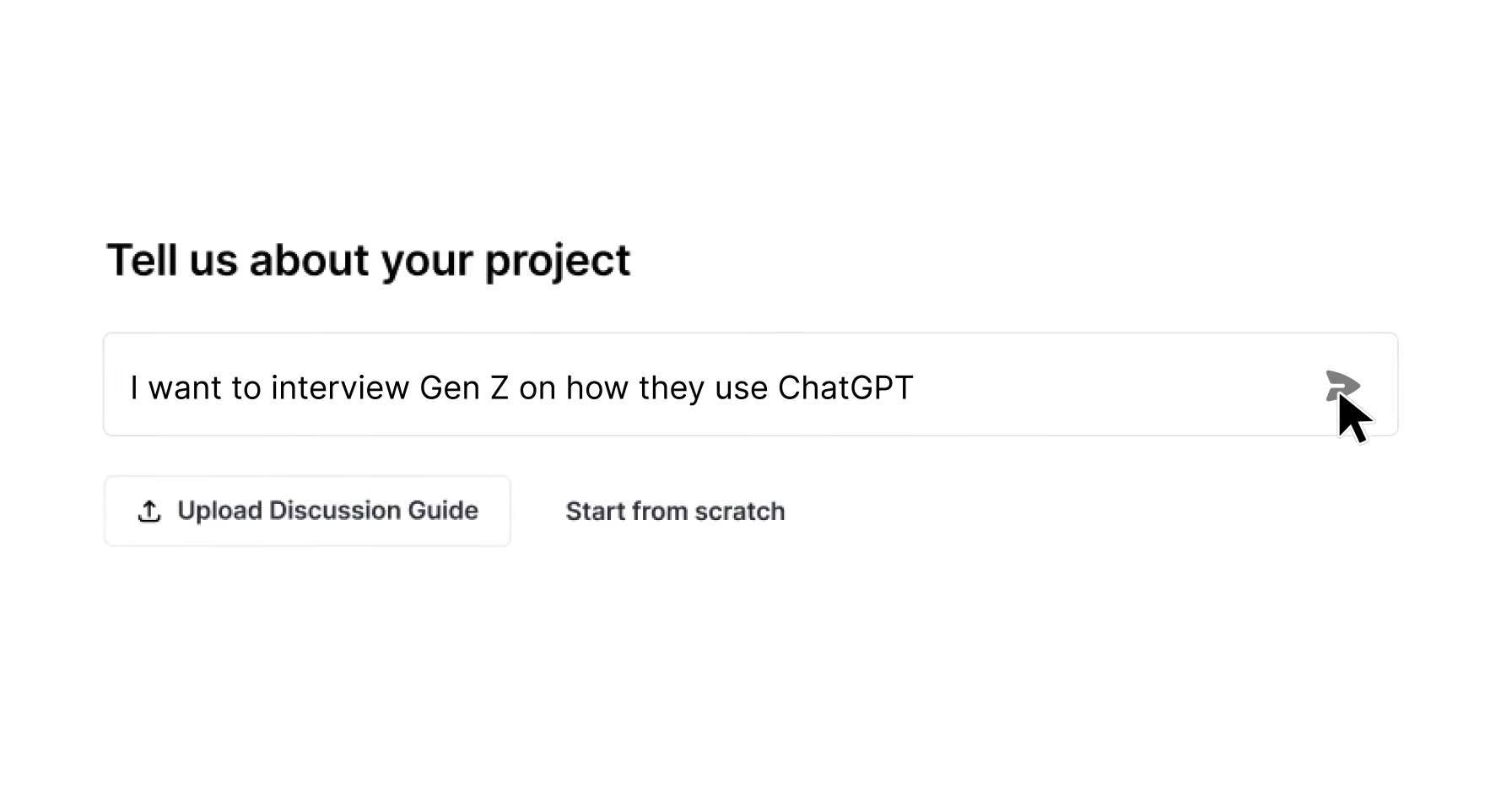
Using Listen Labs, P&G conducted 250+ interviews within hours and surfaced themes around comfort, safety, and reliability preferences over novelty features. The Research Agent automatically generated quantified themes with supporting verbatim evidence, which directly informed product strategy decisions. P&G’s Analytics and Insight Leader reported that “Listen Labs has been a huge help” in delivering actionable insights at unprecedented speed.
The study revealed that claims perceived as exaggerated or unclear could damage brand credibility, which helped teams avoid costly marketing mistakes. Emotional Intelligence provided additional context by quantifying participant reactions to different claim variations, enabling data-driven creative optimization.
Frequently Asked Questions
Can ChatGPT replace qualitative data analysis tools?
ChatGPT provides basic analysis capabilities but lacks the specialized infrastructure required for enterprise research. It cannot recruit participants, conduct interviews, ensure data quality, or provide the methodological rigor needed for business-critical insights. Purpose-built platforms like Listen Labs offer comprehensive research solutions with proven enterprise reliability.
What is the best qualitative data analysis tool for 2026?
For enterprises requiring speed, scale, and reliability, Listen Labs leads the market with end-to-end AI research capabilities. Traditional tools like NVivo serve academic researchers well, while Listen Labs addresses enterprise needs for rapid, large-scale customer insights with complete research lifecycle management.
How does AI compare to manual qualitative analysis?
AI analysis scales qualitative depth to thousands of interviews while maintaining objectivity that human analysts cannot achieve. Manual analysis remains valuable for highly specialized academic research, but AI delivers superior speed, consistency, and scale for business applications without sacrificing insight quality.
How do you ensure participant quality in AI-moderated research?
Quality assurance requires three layers: verified participant networks that exclude professional survey-takers, real-time AI monitoring for fraud detection and response quality, and human oversight for complex recruitment scenarios. Listen Labs implements all three layers with additional frequency limits that prevent panel fatigue.
What types of emotions can AI detect in qualitative interviews?
Advanced AI systems analyze tone, word choice, and facial micro-expressions to identify universal emotions including joy, sadness, anger, fear, surprise, disgust, anticipation, and trust. Every emotion detection links to specific timestamps and reasoning, which provides traceable insights that enhance traditional transcript analysis.
Conclusion
Mastering qualitative data analysis in 2026 requires embracing AI-powered platforms that remove traditional trade-offs between depth, scale, and speed. The seven-step analysis framework remains methodologically sound; what changes is execution speed, with AI acceleration transforming timelines from weeks to hours. Listen Labs exemplifies this evolution, enabling enterprises like Microsoft and P&G to conduct thousands of interviews with consultant-quality analysis delivered in under 24 hours.
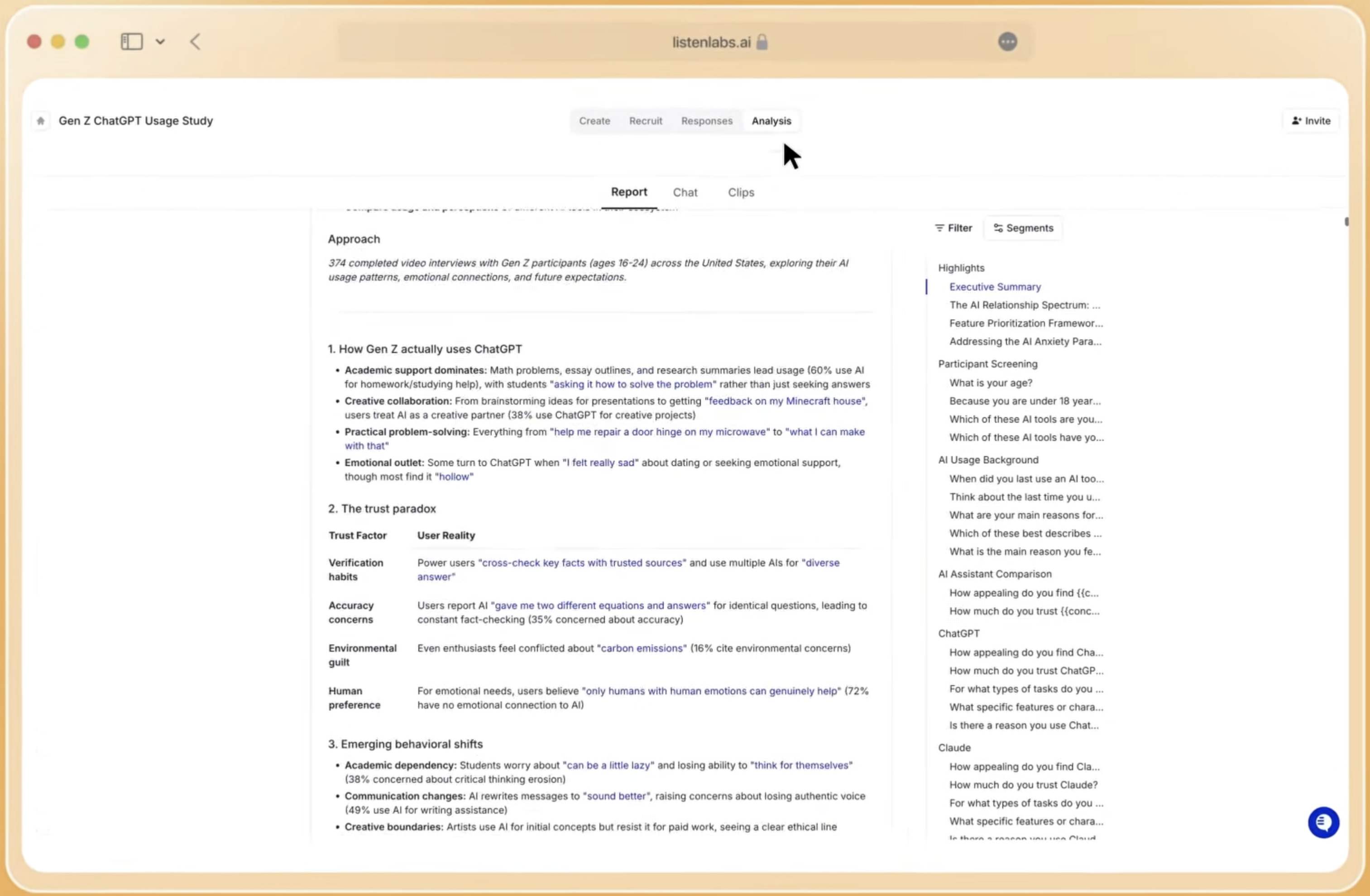
The future belongs to researchers who use AI to multiply their analytical capabilities while focusing their time on strategic interpretation and decision-making. Traditional manual approaches cannot compete with AI platforms that deliver superior speed, scale, objectivity, and insight depth. Book a demo to experience AI-powered customer insights that leading enterprises already rely on.