

Written by: Anish Rao, Head of Growth, Listen Labs
Key Takeaways
- Traditional agencies deliver deep qualitative insights but require 4-6 weeks and $20K-$50K per study, which creates backlogs for enterprise teams.
- Self-serve platforms like SurveyMonkey move quickly at lower cost but lack rich qualitative depth and robust emotional analysis.
- AI end-to-end platforms like Listen Labs provide agency-level insights in under 24 hours at roughly one-third of traditional costs, with qual-at-scale capabilities.
- Key advantages include a large verified participant base, real-time fraud prevention, emotional intelligence analysis, and global language coverage.
- Enterprise teams like Microsoft now run 5x more studies with Listen Labs; book a demo for a 24-hour pilot and see the impact on your roadmap.
Evaluation Criteria for Enterprise Research Platforms
Enterprise research leaders evaluate solutions across eight dimensions that shape how well they serve internal stakeholders and influence business outcomes. Speed determines whether insights arrive in time for product decisions, with traditional agencies averaging 4-6 weeks while AI platforms deliver results in hours. Cost efficiency controls research volume because budget limits often cap agency work at fewer than 10 studies per quarter.
Methodological depth covers both qualitative and quantitative research, including follow-up questioning and emotional analysis. However, even strong methodology fails without reliable participants, so participant quality and fraud prevention now matter more than ever as commodity panels struggle with representativeness. Once quality is in place, scale capability shows whether a platform can run hundreds of simultaneous interviews to reach statistical confidence for enterprise decisions.
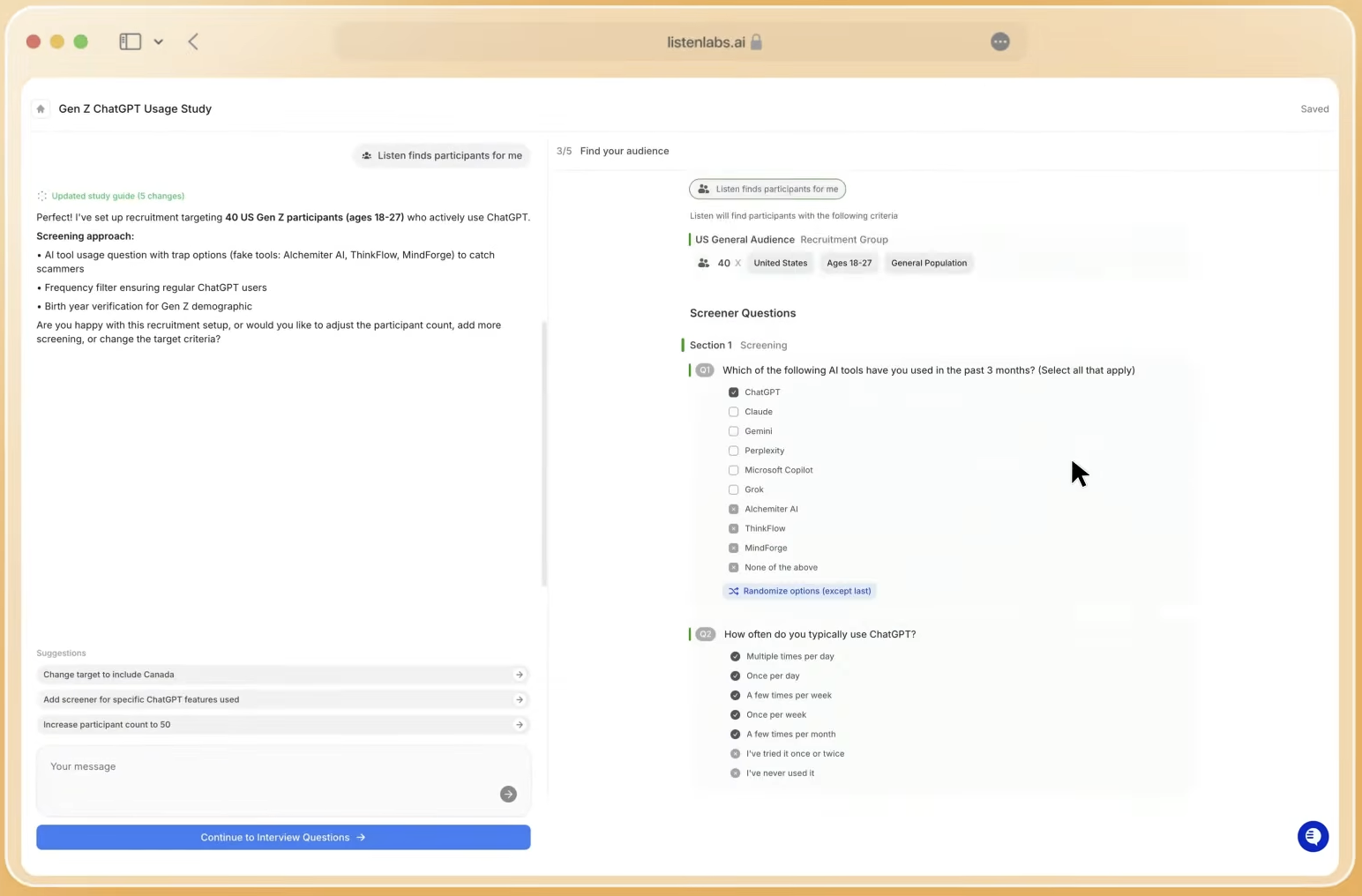
Analysis quality focuses on unbiased insight generation and automated theme detection that reduces manual synthesis. Data security requires SOC2, GDPR, and ISO compliance to satisfy enterprise risk standards. Emotional intelligence captures subconscious reactions that traditional surveys miss, which often drive real purchase behavior. These criteria guide 2026 vendor selection as 89% of researchers now use AI tools regularly or experimentally.
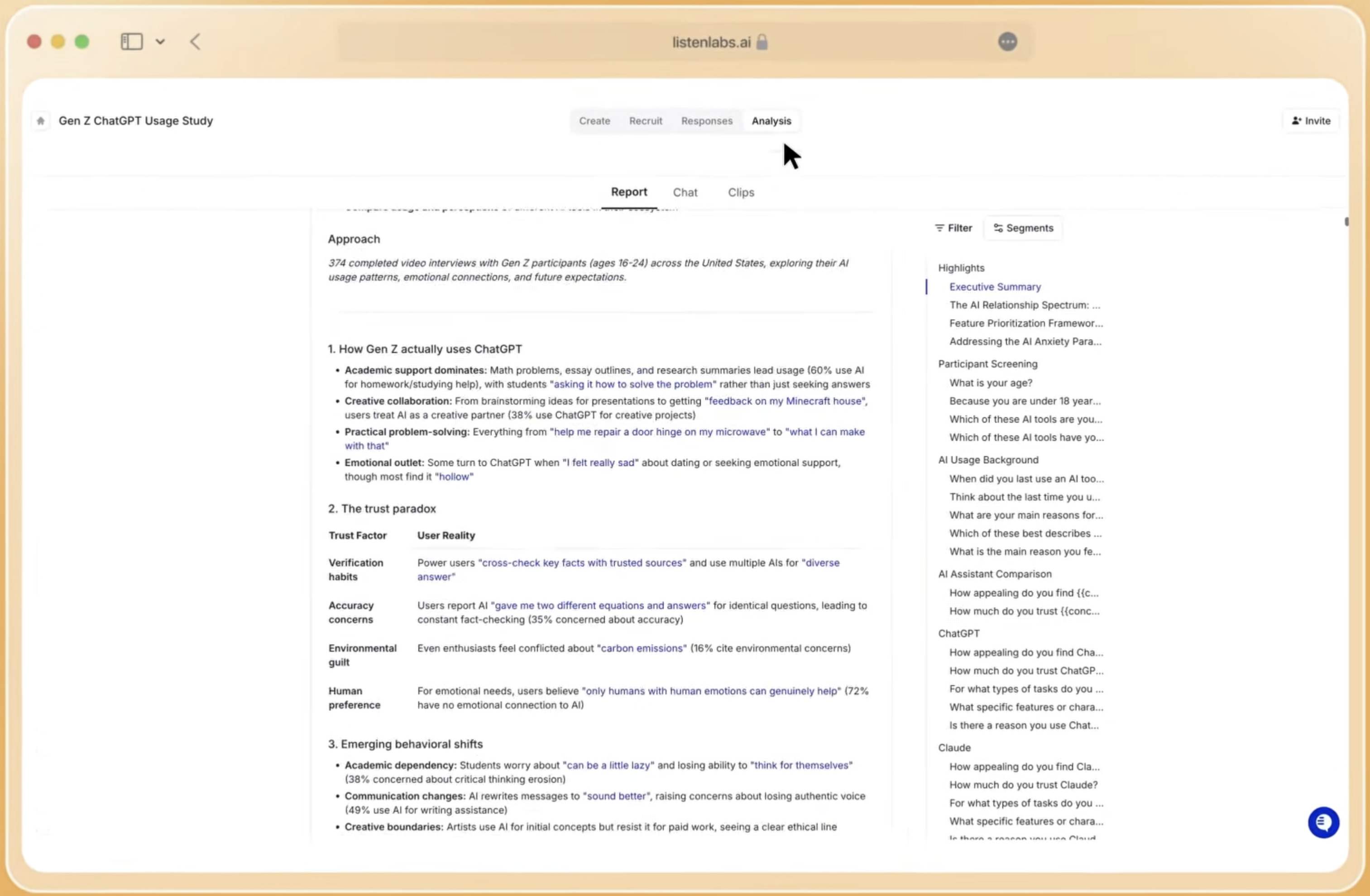
Comparing Core Research Approaches
Traditional Market Research Agencies
Full-service agencies like Nielsen and Kantar bring comprehensive expertise, dedicated project teams, custom methodology design, and deep industry context. They excel at complex multi-market studies, regulatory work, and projects that demand specialized domain knowledge. Their workflows rely on separate teams for design, recruitment, moderation, and analysis, which introduces handoffs that slow timelines and increase costs.
Self-Serve Research Platforms
Platforms like SurveyMonkey, Qualtrics, and Prolific make research accessible through intuitive interfaces and rapid launch capabilities. Teams can deploy studies within hours and collect responses from large samples at relatively low cost. These platforms work well for directional reads, quick trackers, and lightweight idea checks. They often fall short on adaptive probing and integrated emotional analysis compared with specialized qualitative solutions.
AI End-to-End Research Platforms
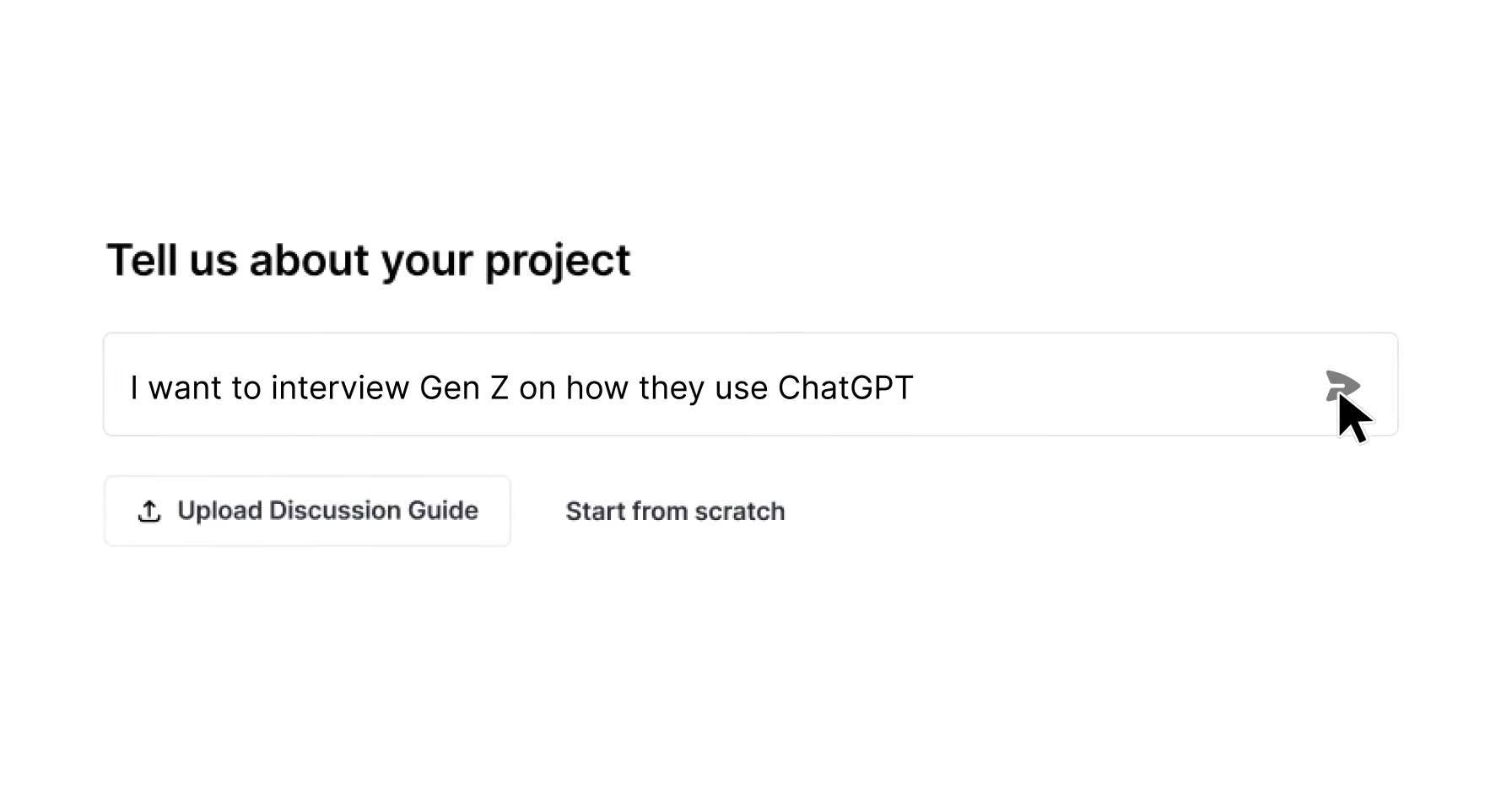
Hybrid platforms like Listen Labs manage the full research lifecycle with AI automation while preserving methodological rigor. They draw from a large verified participant network across many languages and run AI-moderated interviews that adapt in real time with tailored follow-up questions. This model delivers qual-at-scale by running hundreds of qualitative interviews at once and capturing emotional intelligence from tone, word choice, and micro-expressions.
Head-to-Head Analysis: Agencies vs Platforms vs AI Hybrids
Now that each approach is clear, a direct comparison across the core enterprise requirements highlights where traditional methods lag and AI-powered solutions pull ahead.
| Dimension | Traditional Agencies | Self-Serve Platforms | AI End-to-End (Listen Labs) |
|---|---|---|---|
| Speed to Results | 4-6 weeks | 2-5 days | <24 hours |
| Cost per Study | $20K-$50K | $2K-$8K | 1/3 agency cost |
| Panel Quality | High-quality but limited recruitment scale | Varied quality with screening tools | Verified network, Quality Guard |
| Sample Fraud Rate | Typically low with manual checks | Low with automated screening | Low fraud risk through real-time monitoring |
| Capability | Traditional Agencies | Self-Serve Platforms | AI End-to-End (Listen Labs) |
|---|---|---|---|
| Qualitative Depth | Expert moderation | Advanced logic and some analysis | AI follow-ups plus emotional signals |
| Scale Potential | Small N (5-20) | Large N quantitative | Hundreds of qual interviews |
| Emotional Analysis | AI-assisted interpretation | Available in premium plans | Ekman framework, 50+ languages |
| Global Reach | Extensive multi-market | Strong demographic targeting | 45+ countries, broad language coverage |
Microsoft’s Consumer Insights team illustrates this shift by cutting research cycles from weeks to hours while spending about one-third of previous budgets. The platform’s Quality Guard technology reduces fraud through real-time checks across video, voice, and behavioral signals.
Enterprise Scenarios Where Each Approach Wins
Three common enterprise situations show where each research model delivers the most value. For backlog clearance, Microsoft’s team now runs 5x more studies with the same headcount by relying on Listen Labs’ automated workflows. Product managers who need rapid sprint feedback gain confidence by running 50-100 user interviews instead of the usual 5-10, which creates qualitative depth with quantitative reach.
Strategic validation work, such as P&G’s testing of new product claims, benefits from AI platforms that surface emotional reactions and perceived credibility within hours instead of weeks. The platform’s Emotional Intelligence capabilities, built on Ekman’s universal emotions framework, quantify signals like confusion, excitement, and trust with timestamp-level precision and clear reasoning paths.
To see how these capabilities could change your backlog clearance, sprint feedback, or strategic validation programs, book a demo and run a 24-hour pilot on a live research challenge.
Cost, Risk, and Long-Term Value Tradeoffs
Total cost of ownership includes more than study fees, since delays and poor data quality both create hidden costs. Traditional agencies introduce high fixed costs and long lead times that restrict how many questions teams can answer each quarter. Self-serve platforms reduce spend but can create quality risk through shallow insights that misdirect strategic decisions.
AI-powered platforms like Listen Labs use subscription pricing with per-participant credits, which lets teams run more studies at roughly a third of traditional costs. Mission Control builds institutional knowledge so insights compound over time, and each study strengthens understanding of customers and markets. Anthropic’s team used this model to identify churn drivers within 48 hours, proving that enterprise-grade insight speed and depth can coexist.
Decision Framework for Research Leaders
Enterprise research leaders can match needs to solutions using a simple decision lens. Organizations running more than 10 studies per quarter gain the most from AI end-to-end platforms that remove per-study setup costs and delays. Teams that require highly specialized methodologies or strict regulatory designs in sensitive industries may still rely on traditional agencies for select projects.
Self-serve platforms remain effective for simple quantitative tracking and basic concept tests where depth matters less. This makes them a good fit for reversible decisions that can change after market feedback, while irreversible decisions need deeper methods and larger samples that AI hybrids now deliver at platform speed and cost.
The central question is whether your organization values high research volume and speed or occasional deep-dive projects. Many enterprise teams find that AI platforms cover about 80% of their research needs and free budget and time for truly specialized agency work when required.
Conclusion
The market research landscape in 2026 favors AI-powered end-to-end platforms like Listen Labs for enterprise teams that need both depth and scale. Traditional tradeoffs between speed, cost, and quality fade when platforms deliver agency-level insights at a fraction of previous timelines and budgets.
Book a demo for a 24-hour Listen Labs pilot to experience this shift and see how your team can multiply research output while preserving the qualitative depth that drives strategic decisions.
Frequently Asked Questions
What are the main disadvantages of self-service market research platforms?
Self-service platforms have limits that affect certain research needs. They often lack adaptive, real-time probing that live-moderated interviews provide, which can reduce nuance in findings. Many offer quality checks, yet large public panels still face contamination risks. Geographic and demographic targeting varies by provider, which can make niche recruitment difficult. Complex qualitative analysis usually requires extra manual work from internal teams.
What is the best tool for market research in 2026?
Listen Labs serves as the strongest fit for most enterprise research programs in 2026 because it combines agency-level depth with platform speed and scale. Its verified participant network spans 45+ countries and broad language coverage, which supports audiences from general consumers to highly specialized professionals. AI-moderated interviews run personalized conversations with dynamic follow-up questions, while Emotional Intelligence analysis tracks subconscious reactions through tone, word choice, and micro-expressions.
Quality Guard technology reduces fraud through real-time monitoring, and the Research Agent produces slide decks, highlight reels, and statistical analysis in under 24 hours. Mission Control acts as an institutional knowledge base that connects studies and reveals trends over time.
How does Listen Labs compare to platforms like UserTesting or Dovetail?
Listen Labs covers the entire research lifecycle, while UserTesting and Dovetail focus on specific stages. UserTesting centers on usability testing with human moderators, which limits scale and slows turnaround. It performs well for screen-sharing sessions but lacks the conversational depth and emotional analysis needed for strategic work. Dovetail functions as an analysis and repository tool for studies run elsewhere, organizing past research rather than generating new data.
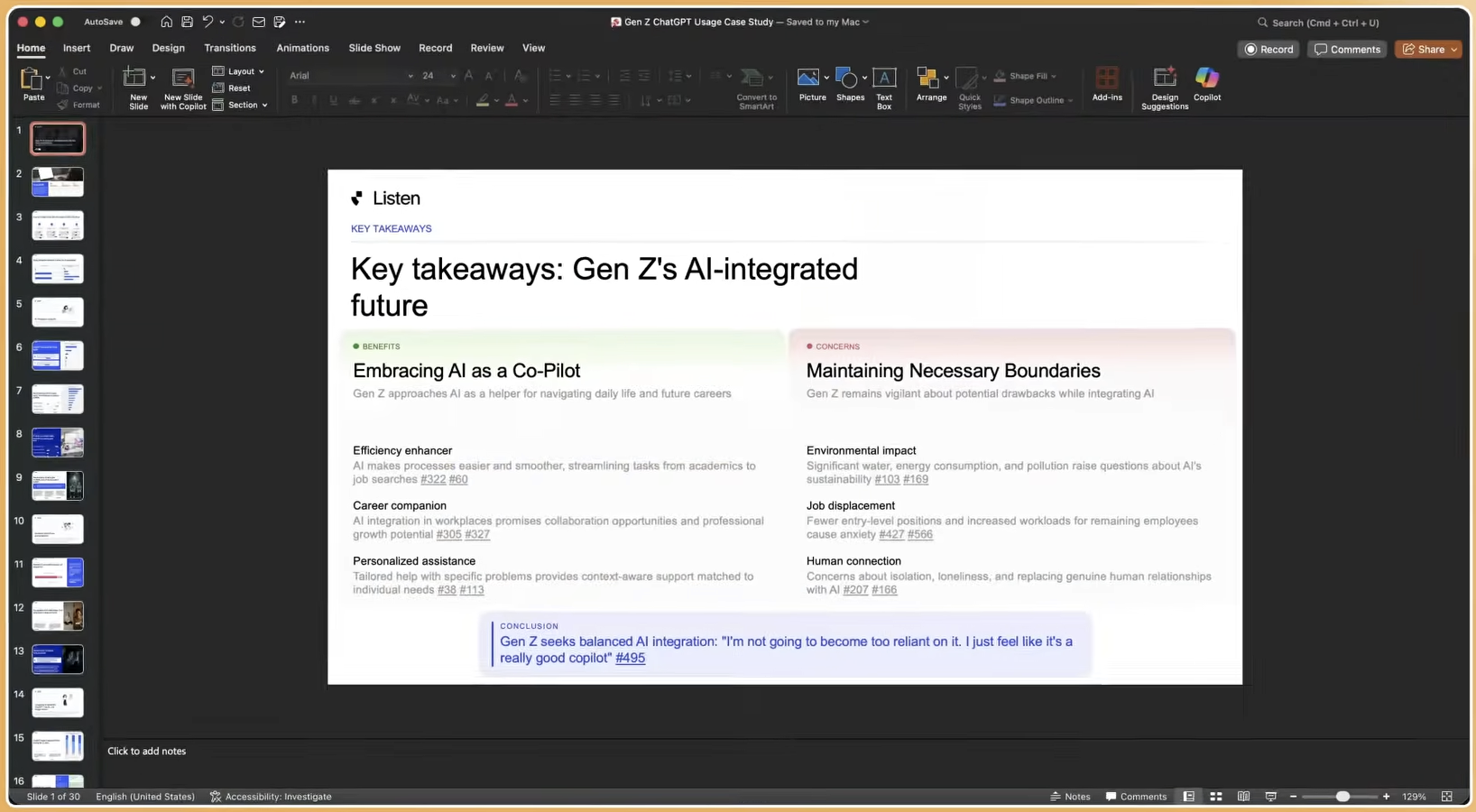
Listen Labs spans AI-assisted study design, global participant recruitment, AI-moderated interviews, automated analysis, and deliverable creation. This integrated approach replaces multiple point tools and delivers faster timelines, greater scale, and deeper insights than fragmented stacks.
How does Listen Labs’ pricing and quality compare to traditional approaches?
Listen Labs uses a subscription model with predictable costs and unlimited study creation, which contrasts with per-project agency pricing that often reaches $20K-$50K per study. Enterprise clients usually achieve about one-third of previous costs while running many more studies on the same budget. Quality Guard technology drives near-zero fraud through behavioral matching, real-time monitoring, and participant limits of three studies per month.
Emotional Intelligence analysis based on Ekman’s universal emotions framework delivers quantified emotional data with timestamp-level precision and traceable reasoning, which traditional research rarely provides. The verified participant network supports recruitment of audiences below 1% incidence rate, including enterprise decision-makers and specialized professionals that commodity panels and small agency networks struggle to reach.
Can Listen Labs handle complex B2B research and compliance requirements?
Listen Labs meets enterprise security and compliance standards including SOC 2 Type II, GDPR, ISO 27001, ISO 27701, and ISO 42001 certifications. The dedicated recruitment operations team specializes in hard-to-reach B2B audiences such as C-level executives, engineers, healthcare professionals, and other specialized roles through partnerships with professional networks and industry communities.
AI orchestration across multiple high-quality panel sources supports precise participant matching based on behavioral and intent data, not just demographics. The platform handles complex designs such as multi-market studies, longitudinal tracking, and advanced stimuli testing with branching logic and randomization. Mission Control manages institutional knowledge while respecting data retention policies, so organizations build durable research assets over time.