

Written by: Anish Rao, Head of Growth, Listen Labs | Last updated: March 29, 2026
Key Takeaways
- Robert Yin’s updated edition outlines clear protocols for case study design and supports exploratory, descriptive, and explanatory projects.
- Stake’s naturalistic methods prioritize intrinsic case depth and researcher reflexivity to capture complex real-world contexts.
- Eisenhardt’s framework uses iterative case comparison to turn empirical data into well-grounded theoretical contributions.
- Contemporary resources now combine mixed methods, digital ethnography, and AI ethics to address 2026 challenges like scale and virtual data collection.
- The Listen Labs AI platform compresses case study timelines from weeks to under a day while preserving qualitative depth, so schedule a demo to see how AI reshapes your research workflow.
The 10 Best Resources for Case Study Research Methodology (2026 Update)
1. Robert Yin’s ‘Case Study Research and Applications’ (2023 Edition)
Yin’s sixth edition remains the core reference for systematic case study design. It provides detailed coverage of research protocols, validity frameworks, and standards for rigor. The 352-page volume pairs methodological guidance with applied examples across academic and industry settings and clarifies boundaries between exploratory, descriptive, and explanatory designs.
Key strengths: Structured protocols, multiple evidence sources for triangulation, and analytical generalization techniques. Limitations: Strong focus on traditional methods with minimal discussion of AI-enabled workflows. Best for: PhD students building a methodological foundation and enterprise teams that need repeatable, documented processes.
2. Robert Stake’s ‘The Art of Case Study Research’
Stake’s 1995 classic develops naturalistic case study approaches across intrinsic, instrumental, and collective designs. The 192-page guide centers on the particularity and complexity of single cases. It uses the Harper School example to illustrate case selection, data gathering, analysis, and the evolving role of the researcher.
Key strengths: Naturalistic methodology, narrative techniques, and reflexivity frameworks. Limitations: Limited guidance for scaling to large samples or multi-market programs. Best for: Researchers who value interpretive depth and contextual nuance more than statistical generalization.
3. Kathleen Eisenhardt’s ‘Building Theories from Case Study Research’
Eisenhardt’s seminal article sets out an inductive process for theory building through systematic case comparison and pattern recognition. The method emphasizes iterative data collection and analysis. It helps researchers move from rich empirical observations to robust theoretical frameworks while preserving analytical discipline.
Key strengths: Strong focus on theory development, structured comparison techniques, and iterative refinement. Limitations: Demands significant methodological skill and careful project management. Best for: Academic researchers creating new theory and practitioners who need evidence-based conceptual models.
4. Baxter & Jack’s ‘Qualitative Case Research Methodology’ Article
This widely cited article offers practical guidance for combining qualitative case study methods with mixed-methods designs. It addresses common implementation challenges and proposes concrete solutions for data collection, analysis, and validation. The piece connects theoretical foundations with day-to-day execution decisions.
Key strengths: Clear mixed-methods integration, hands-on implementation advice, and validation frameworks. Limitations: Limited discussion of digital data sources and AI-assisted analysis. Best for: Researchers who must balance qualitative depth with quantitative corroboration.
5. Merriam & Tisdell’s ‘Qualitative Research’ (2025 Insights)
The updated case study chapter highlights recent methodological developments in digital ethnography, virtual data collection, and ethics for online environments. This resource connects long-standing qualitative traditions with current technology and governance expectations.
Key strengths: Up-to-date coverage, digital method integration, and detailed ethical guidance. Limitations: Broad qualitative scope that limits case study-specific detail. Best for: Researchers who need current perspectives on qualitative methods and ethics across digital contexts.
Request a personalized Listen Labs walkthrough to see how AI-driven workflows remove common methodological bottlenecks while preserving academic standards.
6. Case Study Types and When to Use Them
National University’s guide identifies five primary case study types: descriptive (investigating phenomena through lived experiences), explanatory (developing interventions to identify themes), exploratory (defining questions for later research), multiple or collective (examining complexity through purposeful sampling), and intrinsic (descriptive exploration of unique cases). The table below summarizes how each type differs in purpose, guiding questions, and ideal use cases so you can match design to objective.
| Type | Purpose | Example Question | Best Application |
|---|---|---|---|
| Descriptive | Narrative investigation | How has coaching impacted student attitudes? | Lived experience studies |
| Explanatory | Theme identification | Why do implementation differences exist? | Intervention analysis |
| Exploratory | Boundary definition | What barriers affect reading success? | Preliminary research |
| Multiple | Cross-case comparison | How do districts address engagement? | Pattern identification |
7. SAGE Research Methods Platform for Structured Support
The SAGE digital platform supplies templates, guides, and methodological resources for case study design and execution. It offers structured workflows, validation checklists, and contemporary examples across disciplines. These tools support both new and experienced researchers who need consistent processes.
Key strengths: Extensive template library, clear workflows, and interdisciplinary examples. Limitations: Subscription access and limited direction on AI-enabled research. Best for: Institutional teams that require standardized methodological documentation.
8. Case Study Research Design Example Workflow Checklist
This implementation guide breaks case study projects into actionable checklists for design, recruitment, data collection, analysis, and reporting. It highlights common pitfalls and embeds quality checkpoints throughout the project lifecycle.
Key components: Design validation, recruitment protocols, data collection standards, analysis frameworks, and reporting guidelines. Best for: Practitioners who need a concrete, repeatable process and clear quality controls.
9. Key Journals and Contemporary Articles for Ongoing Learning
Leading journals such as Qualitative Research, Case Studies in Education, and Journal of Mixed Methods Research publish current methodological advances, AI ethics discussions, and applied case examples. Recent articles explore digital transformation, virtual data collection, and the challenge of scaling qualitative work.
Key focus areas: Digital method evolution, AI ethics, scalability strategies, and contemporary applications. Best for: Researchers who rely on peer-reviewed sources to refine methods and stay current with emerging debates.
10. Listen Labs AI Platform for Scaled Case Studies
The Listen Labs platform extends classic case study methodology into an AI-enabled environment that supports large, fast projects. Its verified participant network, Emotional Intelligence analysis, and Research Agent capabilities compress traditional multiweek cycles into rapid deliverables while preserving qualitative depth.

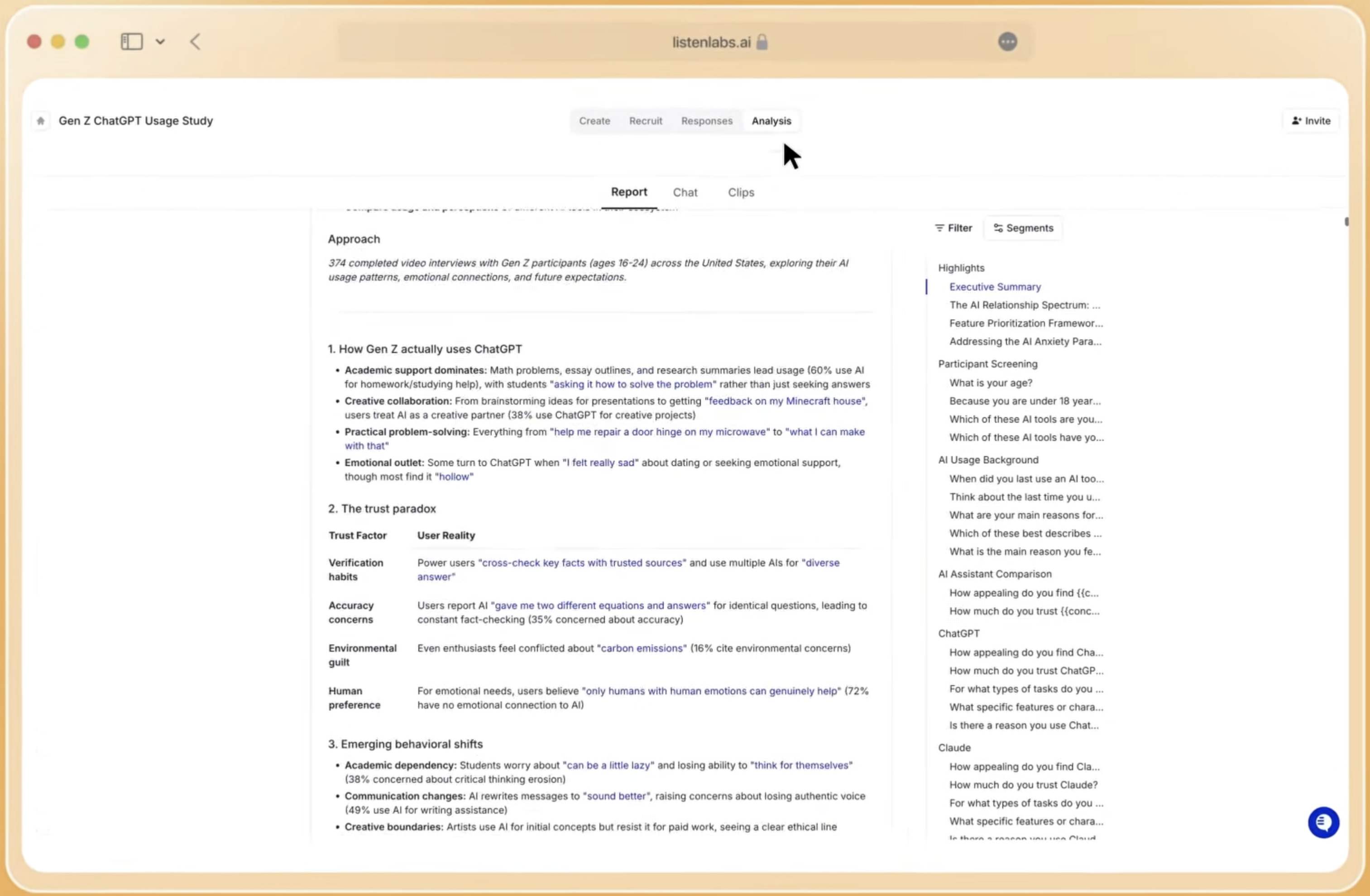
The platform supports Eisenhardt’s theory-building framework through automated pattern recognition that enables iterative comparison. The same AI capabilities align with Stake’s naturalistic approach by running conversational interviews that adapt to participant responses and preserve context. To extend these methods across markets, the platform supports parallel data collection at global scale while Mission Control builds institutional knowledge from each study. Quality Guard verifies every participant and protects the data integrity that rigorous case work requires.
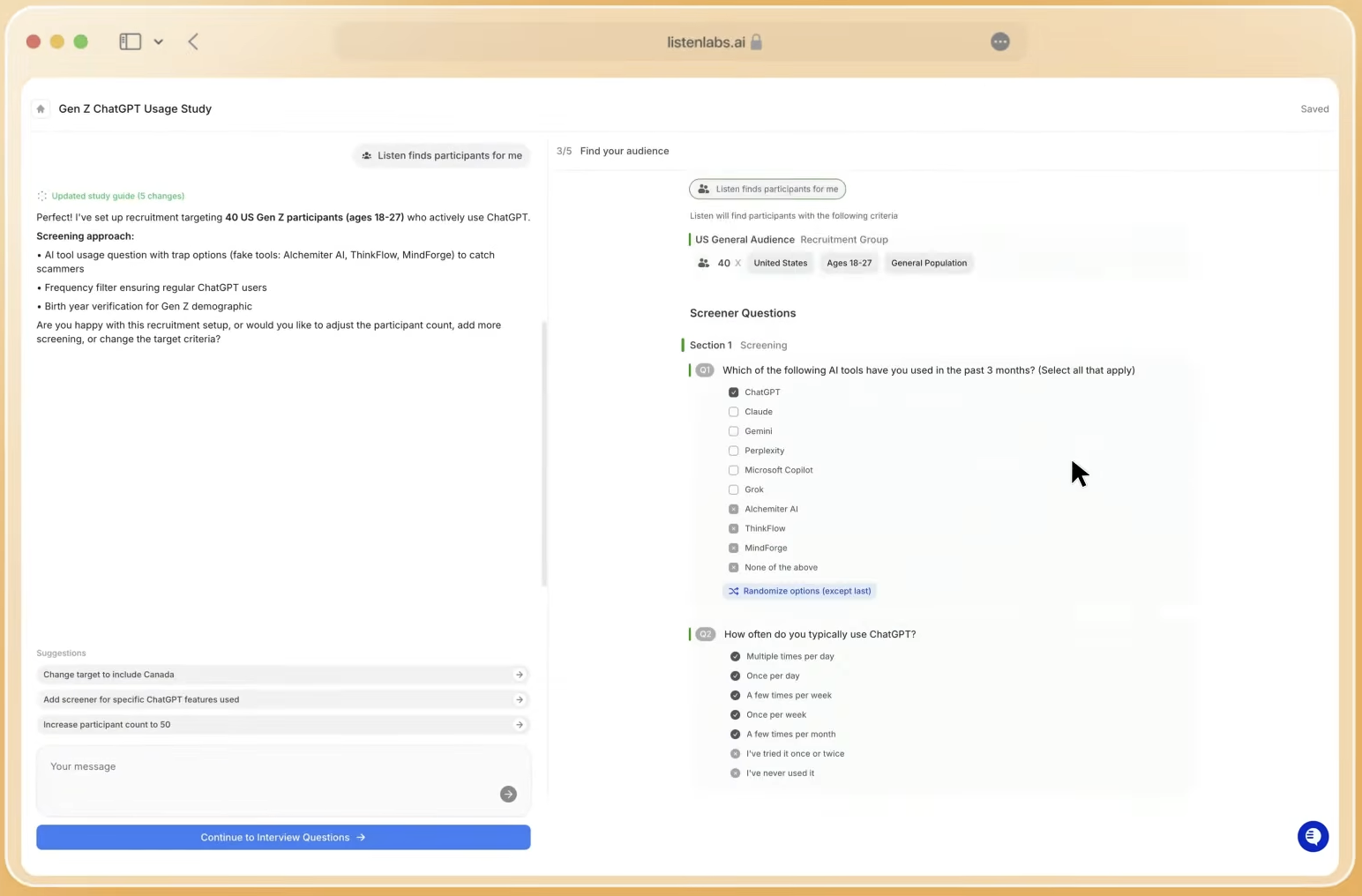
The comparison below shows how Listen Labs addresses common bottlenecks in traditional case study work and improves timelines, scale, analysis, and quality control.
| Aspect | Traditional Methods | Listen Labs Platform |
|---|---|---|
| Timeline | 4-6 weeks | Less than 24 hours |
| Sample Size | 5-15 participants | Hundreds to thousands |
| Analysis | Manual coding | AI Research Agent |
| Quality Control | Manual verification | Real-time Quality Guard |
Enterprise teams at companies such as Microsoft, Anthropic, and P&G use Listen Labs for rapid case study programs that combine qualitative richness with quantitative scale and speed. See the Listen Labs platform in action with a tailored enterprise demo and evaluate its fit for your research roadmap.
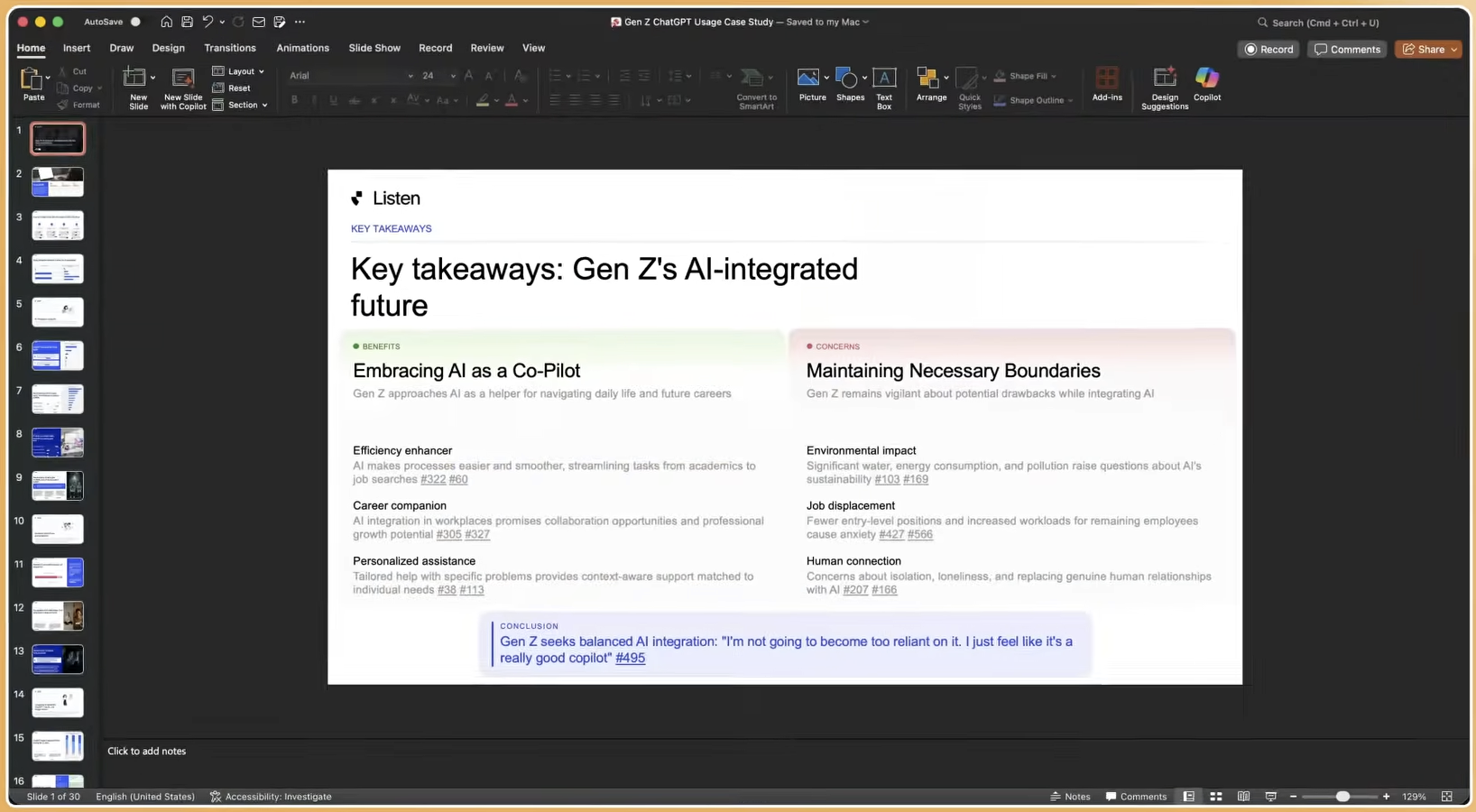
Step-by-Step Case Study Workflow and Checklist
Effective case study projects move through a clear sequence of phases. Work begins with design validation, where you define research questions, select theoretical frameworks, and set case selection criteria. These decisions guide data collection protocols, including which sources to triangulate, how to recruit participants, and which interview guides to use.
The collected material then flows into analysis frameworks that support pattern matching, cross-case synthesis, and theory development. Throughout these stages, rigor checks such as member checking, peer debriefing, and audit trails confirm the credibility of findings. Listen Labs handles the operational demands of each phase by managing recruitment logistics, running AI-moderated interviews, and tracking audit trails so researchers can devote more time to higher-level analysis.
Ethics and Rigor in 2026 AI Case Studies
Modern case study research must confront AI bias, algorithmic transparency, and informed consent for automated analysis. Listen Labs embeds ethical safeguards through transparent AI reasoning, participant control over data use, and bias detection across demographic groups. The platform supports research integrity while using AI to deepen analysis and extend projects to larger, more diverse samples.
Frequently Asked Questions
What is the best book for beginners in case study research?
Robert Yin’s ‘Case Study Research and Applications’ offers the strongest starting point for beginners. It provides systematic protocols, clear examples, and a consistent standard of rigor. The structured format helps new researchers grasp design choices, data collection strategies, and analysis techniques that underpin strong case work.
What are the main types of case studies in qualitative research?
The five main types are descriptive, explanatory, exploratory, multiple or collective, and intrinsic. Descriptive studies focus on narrative accounts of phenomena. Explanatory designs explore themes through intervention analysis. Exploratory work defines boundaries for later research. Multiple or collective designs compare patterns across cases. Intrinsic studies examine a single unique case in depth, and each type requires tailored methods.
How can qualitative researchers scale case studies without losing depth?
Manual methods often force a trade-off between depth and scale because recruitment, interviewing, and coding consume significant time. AI platforms such as Listen Labs reduce this constraint by running hundreds of parallel qualitative interviews while preserving conversational depth, adaptive follow-up questions, and structured analysis across large samples.
How does AI integration affect case study methodology rigor?
AI can strengthen methodological rigor when researchers apply it within established frameworks. Listen Labs supports Yin’s systematic protocols through automated quality checks, maintains triangulation with multiple data sources, and documents transparent analytic reasoning. The platform extends human research capacity while upholding core methodological standards.
Why choose Listen Labs over manual case study methods?
Listen Labs converts case study research from a slow, manual process into a fast, AI-supported workflow while preserving academic standards. The platform removes recruitment logistics, conducts AI-moderated interviews with human-level conversational depth, and delivers structured analysis with clear reasoning. This shift allows researchers to invest more effort in theory building, stakeholder alignment, and strategic decision-making.
Conclusion
These ten case study methodology resources connect foundational theory with the realities of AI-enabled research in 2026. Listen Labs illustrates how classic frameworks can scale to larger, faster projects without sacrificing depth or integrity. Experience next-generation qualitative research with a guided Listen Labs demo and assess how it can support your upcoming case studies.