

Written by: Anish Rao, Head of Growth, Listen Labs | Last updated: March 29, 2026
Key Takeaways
- Listen Labs leads 2026 AI testing tools with AI-moderated interviews, emotional intelligence, and a 30M participant panel for qual-at-scale validation.
- Testim focuses on ML-powered self-healing for web UI stability, cutting test maintenance with adaptive smart locators.
- Mabl supports low-code test journeys with auto-healing and visual AI, which suits non-technical QA teams.
- Applitools specializes in visual regression testing, replacing manual assertions with AI checkpoints that can save millions in engineering time.
- See how Listen Labs delivers consultant-quality insights in 24 hours at a fraction of traditional research costs.
Why AI Testing Matters in 2026
AI testing in 2026 solves three persistent QA problems: brittle tests, slow feedback, and shallow user understanding. Traditional QA tools catch functional bugs but miss emotional reactions that drive churn and adoption. Modern teams now pair technical automation with AI that listens to users, reads sentiment, and feeds insights back into product decisions.
The tools below fall into two broad groups. Some focus on emotional and qualitative product validation, while others focus on technical stability across browsers, devices, and complex UIs. Use this distinction as you review the comparison table and detailed breakdowns.
Quick Comparison Table (2026)
The table below shows how each platform supports a different part of the testing lifecycle, from emotional product validation to visual regression detection. Use the “Best For” column to match each tool to your team’s primary QA challenge.
| Tool | Rating | Best For | Pricing | Key Features | Verdict |
|---|---|---|---|---|---|
| Listen Labs | 10/10 | Product validation/emotional QA | Subscription + credits | AI interviews, Emotional Intelligence, 30M panel, Research Agent | Best overall, replaces UserTesting with faster, qual-at-scale insights |
| Testim | 9/10 | Web UI self-healing | $450/mo | Smart locators, ML stability | Strong choice for codeless web automation |
| Mabl | 8.5/10 | Low-code journeys | Starting at $499/mo | Auto-healing, visual AI | Well suited to non-coders in QA |
| Applitools | 8/10 | Visual regression | $969/mo | Visual AI, baselines | Top pick for complex UI visual diffs |
1. Listen Labs: AI Qual-at-Scale Product Testing Platform
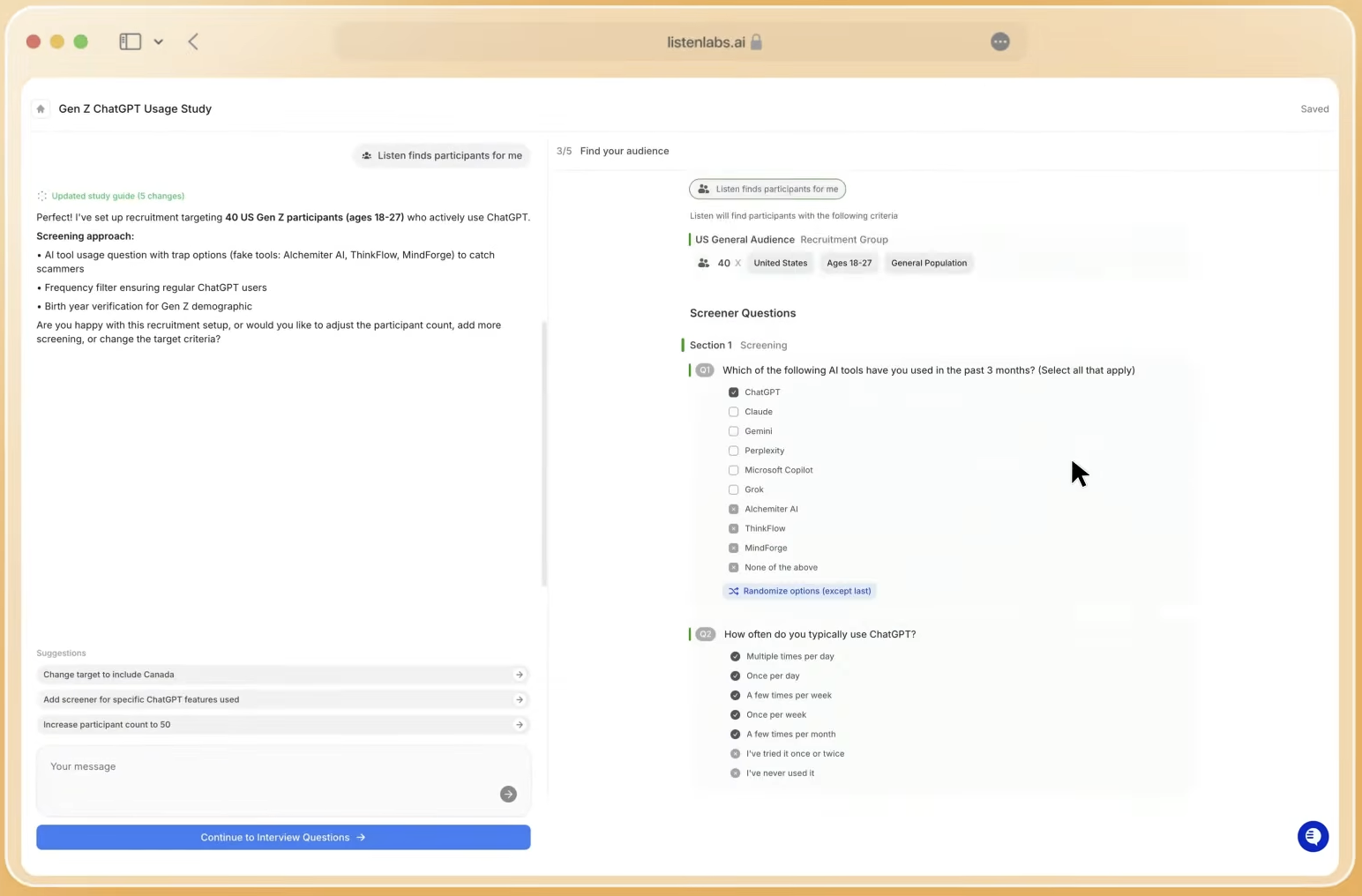
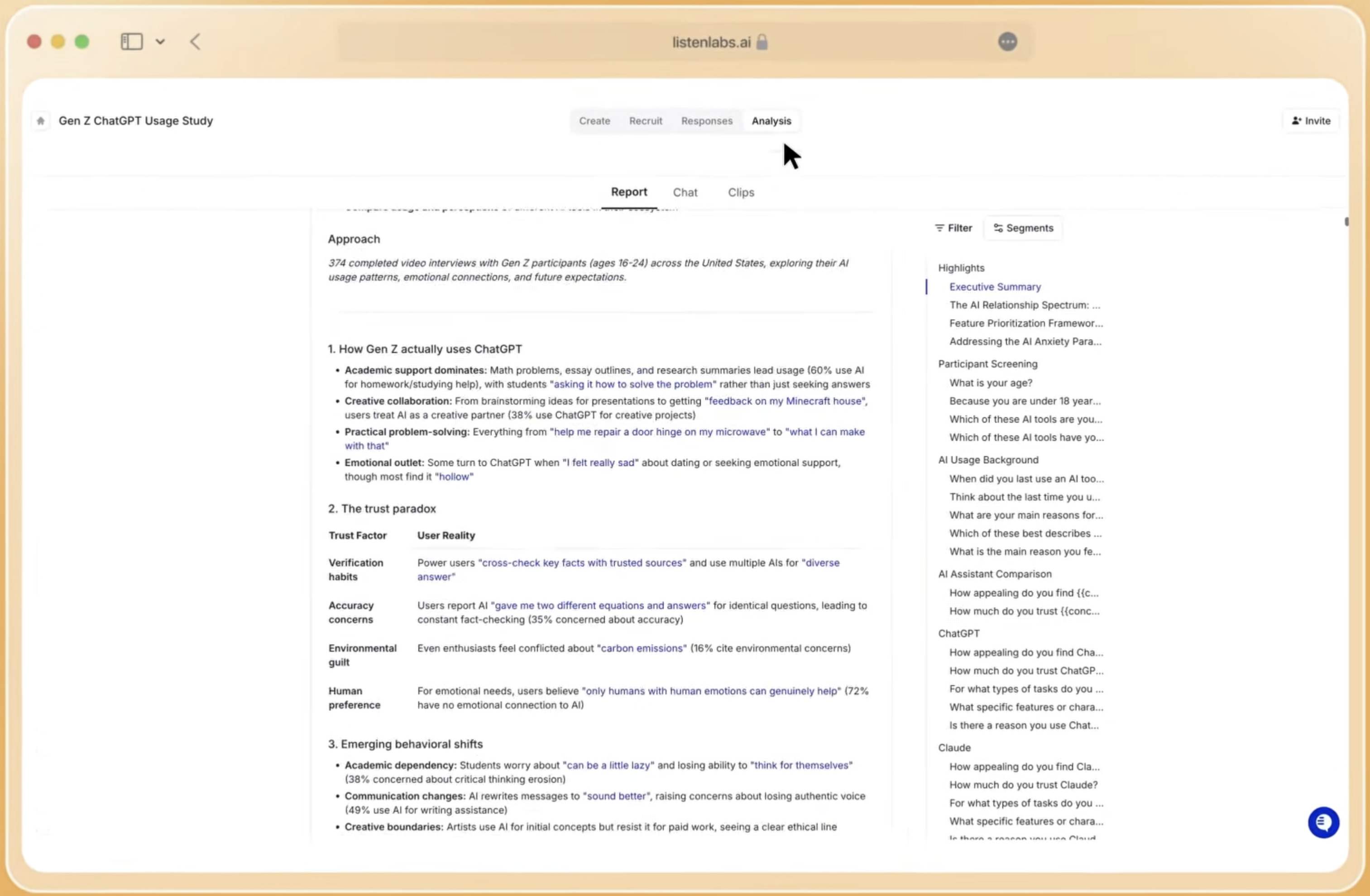
Listen Labs transforms product validation by running hundreds of AI-moderated interviews at once and surfacing emotional insights that traditional testing tools miss. The platform manages the full research lifecycle, from recruiting participants through analysis and reporting.
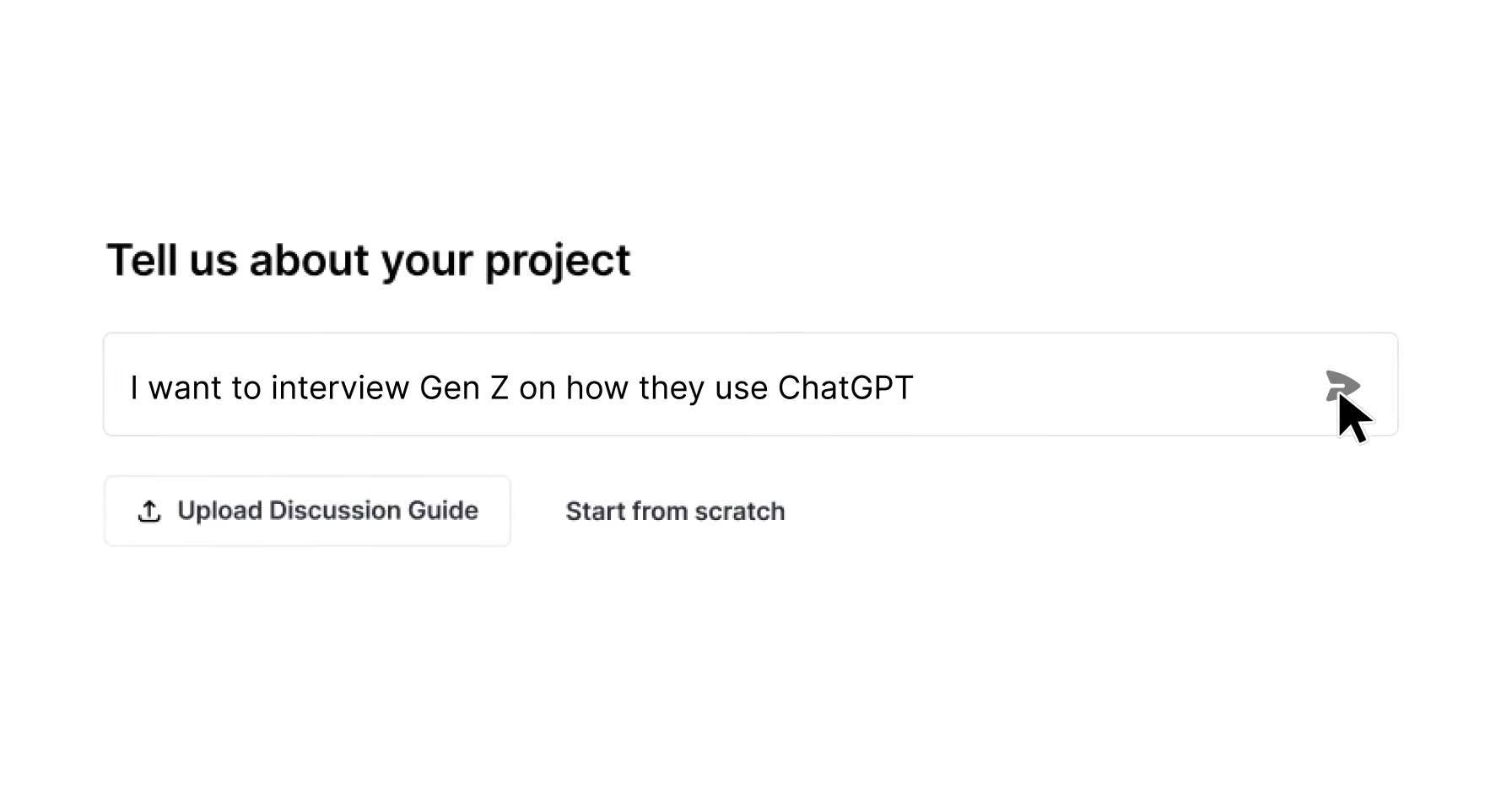
Key 2026 features include:
- AI-moderated video interviews with screen-sharing capabilities
- Emotional Intelligence that analyzes micro-expressions across 50+ languages
- 30M verified participant panel with Quality Guard fraud detection
- Research Agent for automated analysis and deliverable generation
- CI/CD API hooks that create continuous user feedback loops
Pros: 5x faster than traditional research, zero fraud guarantee, and trusted by teams at companies like Microsoft and Anthropic. Cons: Works best for organizations that run 100 or more studies each year.
Pricing: Subscription model with credits per participant, which delivers qual-at-scale insights at significantly lower cost than traditional research panels.
Verdict: Choose Listen Labs when you need enterprise-grade QA that includes emotional validation and rapid user insight, not just functional pass or fail results.
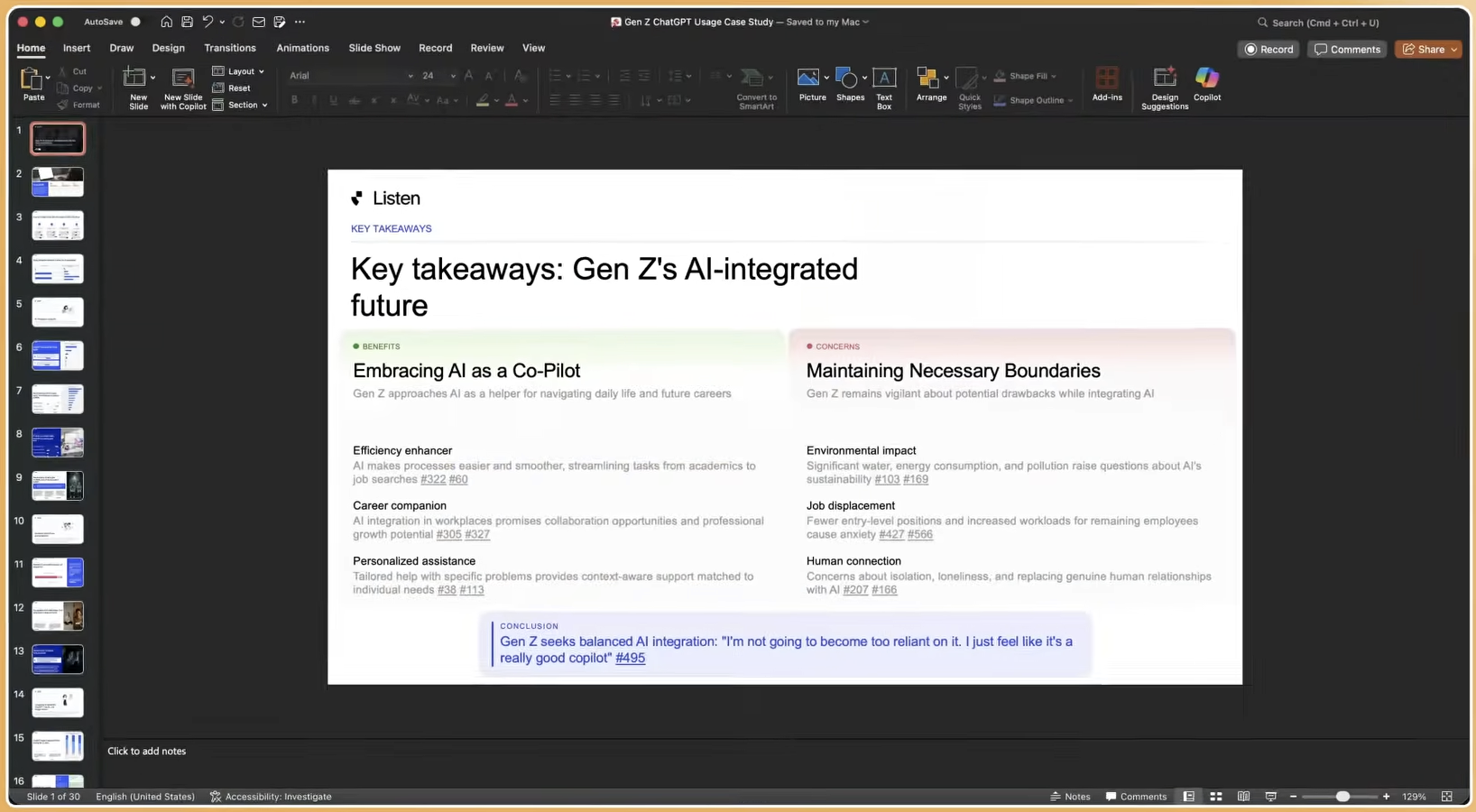
While Listen Labs explains why users react the way they do, the next tools focus on keeping your applications technically stable. These platforms concentrate on self-healing tests, browser coverage, and visual accuracy across fast-changing UIs.
2. Testim: ML-Powered Web Test Stability
Testim uses machine learning-based smart locators that adapt to UI changes during execution, which significantly reduces test maintenance. The platform supports codeless test creation through visual recording and allows optional custom code for advanced scenarios.
Testim’s maintenance reduction comes from three connected capabilities. First, weighted multi-attribute element identification helps tests find UI elements even when individual attributes change. When tests fail, root cause analysis links failures to specific Git commits, which removes much of the manual investigation work. Cross-browser execution in proprietary environments then validates these behaviors across your browser matrix without extra infrastructure.
Pros: Strong adaptation to UI changes and enterprise compliance support, including SOC2 and SAML. Cons: Requires some technical knowledge and offers limited depth for visual testing.
Pricing: Starts around $450 per month, with enterprise plans typically ranging from $30K to $100K annually.
3. Mabl: Low-Code AI Testing Platform for Web Teams
Mabl delivers AI-powered self-healing tests with visual regression detection, and one case study reports $240,000 saved over two years compared to Selenium maintenance. The platform shortens test creation from weeks to hours through a browser extension that records user flows.
Mabl combines machine learning-driven test stabilization with performance testing and unlimited parallel execution for enterprise CI/CD pipelines. These capabilities help teams keep coverage high while keeping maintenance effort manageable.
Pros: Friendly for non-technical QA teams and strong CI/CD integration. Cons: Primarily focused on web applications and offers limited advanced customization for highly complex edge cases.
Pricing: Around $450 per month with a 14-day free trial for evaluation.
4. Applitools: Visual AI Testing for Complex Interfaces
Applitools focuses on AI-powered visual validation, and one company reportedly saved $1 million annually by replacing thousands of assertion lines with visual checkpoints. The platform uses proprietary Visual AI trained on millions of screenshots to detect subtle UI differences.
The Ultrafast Grid runs parallel tests across hundreds of browsers and devices in seconds, which accelerates cross-browser coverage. Root cause analysis then surfaces DOM and CSS differences behind visual failures, so engineers can pinpoint exactly what changed.
Pros: Industry-leading visual regression detection and excellent cross-browser support. Cons: Premium pricing and a need for careful baseline management.
Pricing: Starts at $969 per month, with enterprise plans typically between $10K and $50K annually.
5. Functionize: Enterprise NLP-Driven Testing
Functionize lets non-technical users write tests in plain English and achieves 99.97% element recognition accuracy through eight years of training data. The platform works especially well for data-heavy applications that benefit from ML-driven failure prediction.
Key capabilities include adaptive locators, smart parallel execution, and risk-based test prioritization that uses historical test data. Together, these features help teams focus on the highest-risk areas while keeping execution time under control.
Pros: Strong natural language capabilities and predictive maintenance features. Cons: Custom pricing only and reliance on a proprietary execution environment.
Pricing: Custom usage-based model, with typical annual contracts between $20K and $60K.
6. LambdaTest AI (KaneAI): Cloud-Based Cross-Browser Testing
LambdaTest’s KaneAI supports agentic AI test creation across 3,000+ browser and OS combinations and uses HyperExecute for intelligent test distribution. The platform also supports natural language test generation and integrates with more than 120 CI/CD tools.
LambdaTest includes real device cloud testing, AI root cause analysis, and flaky test detection with automatic retry mechanisms. These features help teams validate behavior on real hardware while keeping flakiness under control.
Pros: Broad device coverage and competitive pricing. Cons: Limited depth in test reporting and a setup process that can feel complex for new teams.
Pricing: Free tier available, paid plans from $15 per month, and KaneAI agents priced at $199 per month per 1,000 agents.
Best Free AI Tools for Automated Product Testing and QA
Free and open-source tools help teams experiment with AI-assisted testing before committing to enterprise platforms. Popular options include Playwright AI forks with GitHub Copilot integration at $10 per month, Katalon’s free tier, and several community-driven self-healing extensions.
These solutions work well for early-stage automation and smaller teams. They still lack the fraud detection, emotional intelligence, and qual-at-scale capabilities that Listen Labs offers for comprehensive product validation.
What QA Teams Say on Reddit in 2026
Reddit discussions often highlight Testim and Mabl for reliability in day-to-day regression suites, while some users report KaneAI flakiness in production environments. Listen Labs appears in these threads as a “hidden gem for product validation” that surfaces churn risks and adoption drivers that traditional tools overlook.
Teams that care about emotional intelligence and user sentiment describe Listen Labs as a complement to their existing automation stack. They use it alongside tools like Testim or LambdaTest to understand both functional behavior and user reactions.
Buyer Guide: Matching AI QA Tools to Your Role
Start tool selection by clarifying your primary role and the pain points that matter most. QA engineers usually struggle with brittle tests and constant maintenance, so self-healing capabilities become the top priority. Listen Labs and Functionize stand out here for their intelligent handling of changing interfaces and flows.
Development leads face different challenges around pipeline reliability and speed. Robust CI/CD integration from tools like LambdaTest and Sauce Labs helps keep releases moving while maintaining coverage. Product managers need visibility into user sentiment alongside functional metrics, which makes no-code platforms like Listen Labs valuable because they connect emotional feedback with product decisions.
ROI analysis shows Listen Labs delivering three times more studies at significantly lower cost, resulting in a 500% throughput improvement over traditional research methods. Calculate your own ROI with a personalized demo that shows how qual-at-scale testing could compress your validation timeline.
FAQ
What is the best free AI testing tool for 2026?
Playwright provides a strong open-source foundation with GitHub Copilot integration for AI-assisted testing. Katalon’s free tier offers core test creation and execution features for teams that want a packaged solution. These tools still lack the enterprise-grade fraud detection and emotional intelligence that Listen Labs delivers for large-scale product validation.
How does Listen Labs compare to UserTesting?
Listen Labs delivers results in less than 24 hours, while UserTesting relies on slower, human-dependent processes. Listen Labs also conducts hundreds of parallel AI interviews and layers emotional intelligence analysis on top of the transcripts. This combination provides deeper insight into user reactions at a lower overall research cost than traditional panels.
Which AI tools work best for mobile QA?
LambdaTest performs well for mobile QA with real device cloud testing across thousands of configurations. Maestro supports native iOS and Android testing with auto-wait logic that stabilizes flows. Listen Labs complements these tools by offering mobile screen recording inside its research platform, which helps teams see how users experience mobile journeys.
What is typical pricing for startup teams?
Listen Labs offers self-serve options that fit smaller teams and growing startups. LambdaTest starts at $15 per month, which makes it accessible for early automation. Mabl begins around $450 per month and targets teams that want low-code capabilities. Most enterprise platforms move to custom pricing above 100 employees, while Listen Labs keeps a transparent credit-based model that scales with usage.
Do self-healing tests actually work?
Testim delivers meaningful maintenance reduction through its smart locators and ML-based stability features. Other tools advertise similar benefits, but real-world effectiveness varies widely. Independent evaluations suggest that only about 20 percent of tools handle self-healing reliably in production CI/CD environments.
Conclusion: How to Choose Your 2026 AI QA Stack
Listen Labs stands out as the top choice for comprehensive product validation because it combines functional testing signals with emotional intelligence at scale. Testim ranks highly for web UI stability, and Mabl offers accessible low-code automation for teams without deep engineering resources. Teams that rely only on traditional testing approaches, which ignore user emotions and require weeks for insights, now fall behind faster-moving competitors.
Modern QA workflows shift from brittle, maintenance-heavy scripts to intelligent, self-healing validation that captures both what users do and how they feel. Explore a Listen Labs demo to see how qual-at-scale testing can reshape your QA process and extend the capabilities of the tools you already use.